Category: Branding, Marketing, Advertising

  • Moving Marketing Budget From Facebook to Twitter — A Case Study

    Are you frustrated with Instagram? How’s your Facebook Page working out for you? Did you get distracted from blogging by making TikTok videos? It happens to the best of us. 

    In marketing, it’s important to not only know who your audience is but where they spend time. Frankly, I’ve never believed that anyone spends time on Facebook. Facebook has always had a post-and-go culture. This is why commenting as a business is super important. 

    Sometimes, however, that’s not a good enough reason to stay with a channel that is underperforming for your business goals. This was the case with my long-time client, Team Clayton out of Glendale, Arizona.

    Who is the Business?

    Team Clayton is a RE/MAX Professional and has been serving the greater Phoenix area for quite some time. It’s a family business that prides itself on relationships. Their website says, 

    “Each member of Team Clayton brings their own perspective in serving different generations of clients, with 45 years of combined experience. As Tom puts it, ‘You get three for the price of one.’”

    What Was Team Clayton Doing Before?

    I’ve known Kyle Clayton — thanks to Amy Donohue and Twitter — for over ten years. I was lucky enough to have finally met him in person in 2016! Kyle himself is a naturally gifted marketer and entrepreneur. 

    So when Team Clayton got busy in the fall of 2019 and needed to outsource Facebook Page Management with a custom plan, they came to me first.

    We set up a plan to post to their Facebook Page six times a week including native video posts, Facebook Live, virtual home tours, as well as photos and links to listings. We also included sharing other people’s posts that are helpful and relevant including local events and restaurants in Phoenix. 

    Of course, I also commented and liked other local business pages and commented as appropriate.

    We also experimented with $20 boosted posts. This is tricky for real estate because it is a special ad category.

    What Was the Problem?

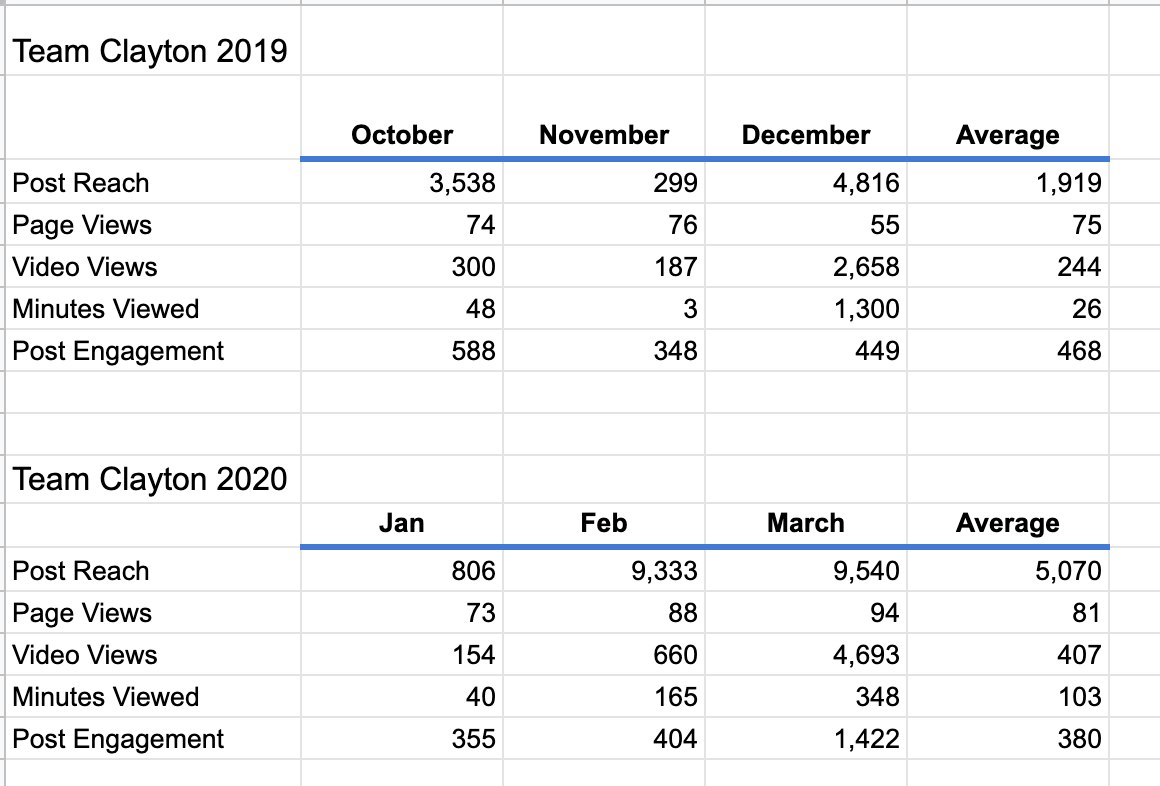
    Everything was going well with Facebook Page management and strategy until it wasn’t. Our average monthly research (impressions) for Q42019 was 1,919. Q12020-Q42020 was 5,030. (Q42019-Q42020 was 5,968) There’s nothing wrong with those numbers.
    XmQrVxMQhwEdCXEo1QID5xXLPqF7IXWL GZxkaoBgbGWcpT40HmzZYvZ9djxklPfG2pM8mKu5IaEtPqCNr3bsY1k0UeAQdcNNF5DkFJUoD9K tVCyFXNN J83VsLZvcDTj1AhGz3

    Then the pandemic hit. It changed how people interacted online. We had an election. We had Zoom fatigue. Facebook Exodus. New Privacy Laws affecting Apple and Facebook. 

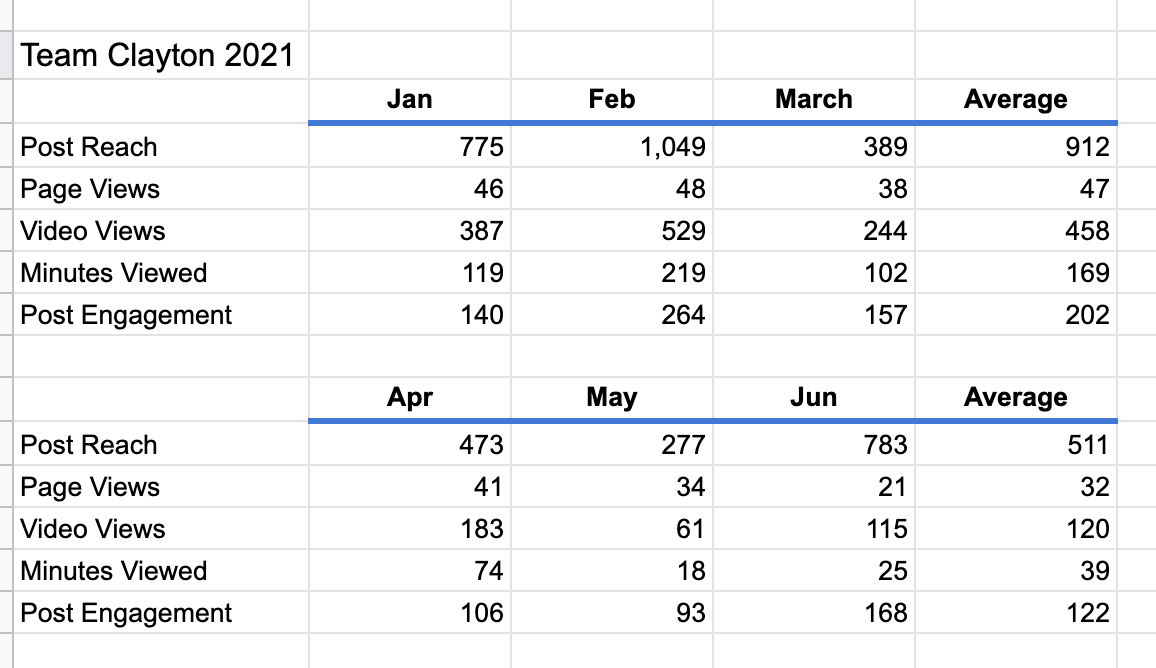
    It was a perfect storm that brought our average reach from almost 6,000 to 624. (Six hundred twenty-four. That’s not a typo.) It dropped to 277 in May. What the what??? Not okay.
    rCX4cqmHtetF18vvvgBbaAHvhDj2y2WlGTDABil 5KG MQbY9WSFOKtQzh3GpL5KuHtYiQs3KBtdCJePBWUoNHaWnw5YF2k3DT77r62HPsYNCILQe9nTzAkFVdWDbwcRfMTN1OVg

    They all came to a point where Kyle and I had a meeting and were like, “hmmm do you like these results? I don’t.” Twinning of course — as marketers do. 

    Across all of my clients, I became very cynical about Facebook results. We looked at the numbers and I said, 

    “What if we shifted some budget to Twitter as an experiment for one month?”

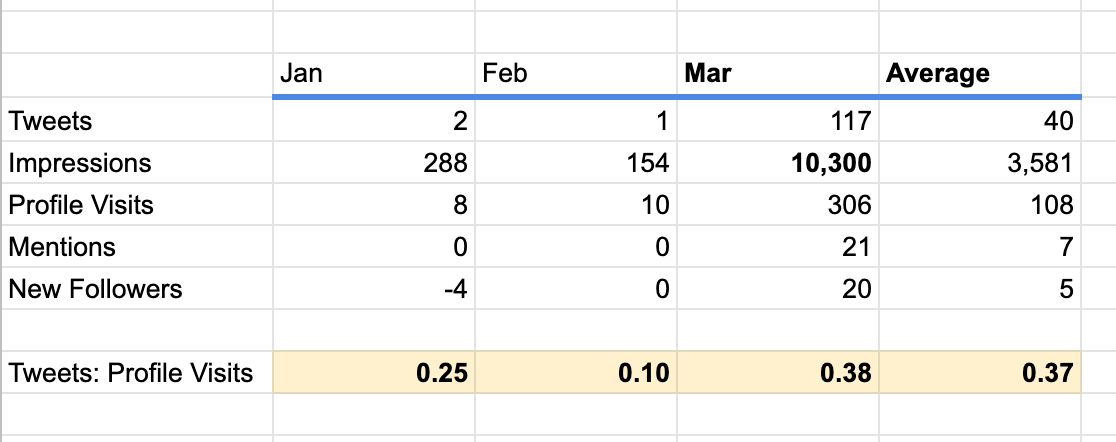
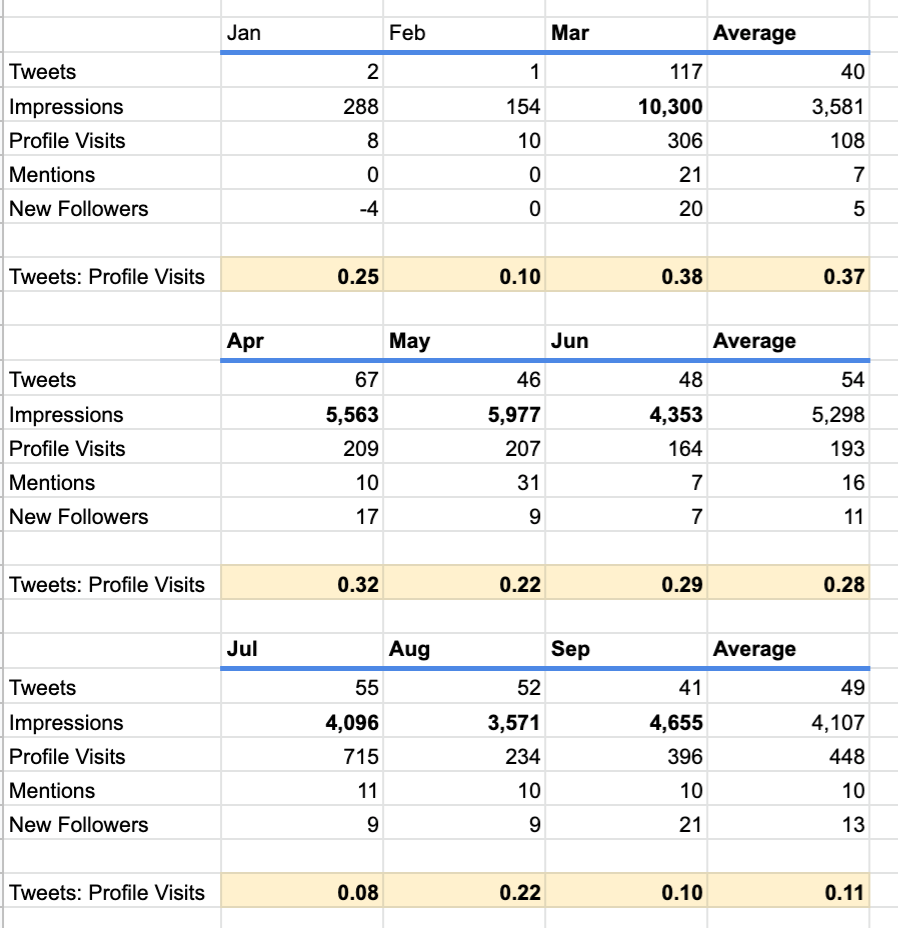
    We tried adding Twitter in March and immediately had 10,300 impressions. March’s reach for our Facebook Page was 389. That was a compelling difference. 
    What Was the Solution?

    We stumbled on something that even I doubted would work for a local realtor. Of course, Team Clayton has an Instagram account and Facebook Page. But I had no idea that the first month would be so dramatic. Of course, it leveled out — numbers always go up when there was such little activity before.

    We reduced the Facebook plan to my Lite plan and added Twitter Lite. We kept Facebook in the mix until June when we realized it wasn’t the best use of our marketing budget.

    Kyle added the native videos from Facebook to YouTube, I had them transcribed, and we started tweeting those out along with more of the same type of content that we used on Twitter. 

    We shifted that Facebook Page budget to creating blog posts from YouTube videos.

    What Were the Results?

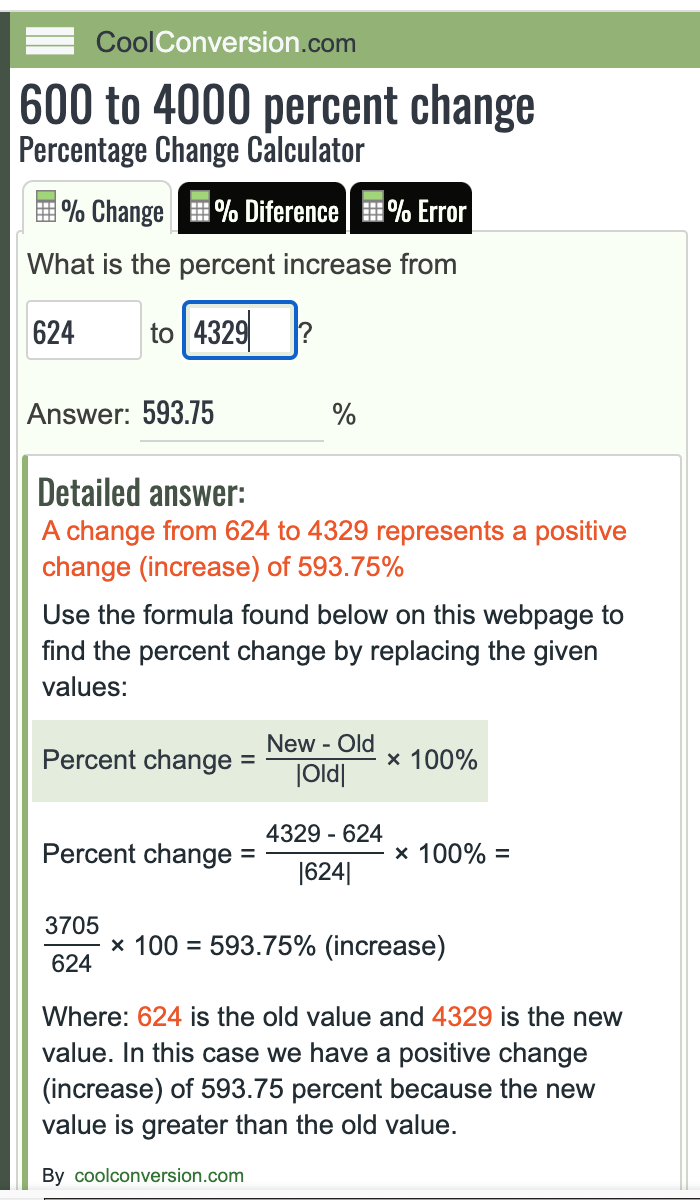
    Who doesn’t love almost 593.44% growth?

    Going from 600 to almost 4000? Yes, please!
    3 b0rQFYOro ZhvjUvy8OSUx4XPwXwgd4yCNGCOjhiutGUpV b8T0BXNHwvKDzZwYXqOtxfnFEW0g0Ofd51u3qMPvbf9AjpvfILSAioav1nj8K5jOPifB28NWiq VE6bo6zW 8h2

    The average impressions for Q12021 is 3,581, Q22021 is 5,298, and Q32021 is 4,107. For this year through September of 2021, the average number of impressions on Twitter is 4,329. Nine months of stability, basically.

    That amount of impressions is a number we can live with and only build upon as we continue a cohesive marketing strategy.
    EVGHioU dbTBnv1k jogRPv Ud499F3KgmUxCSAzCQXnz7B3a3KekLs

    What Does Team Clayton’s Marketing Look Like Now?

    Team Clayton hired a great agency for a redesign of their website and advertising. So the Facebook Page and Instagram accounts are completely in their capable hands. And they continue their in-house newsletter and local events as well as the Month of Miracles drive!

    Partnering with Bridget Willard, LLC, Team Clayton and I are using the YouTube library we built over the last year or so for blog posts. Of course, we’re sharing them on Twitter!

    I’m honored to partner with a great client like Team Clayton. Seriously, my heart is full.

    Background Notes for the Team Clayton Case Study

    What are Impressions?

    When you pay for a billboard, you’re paying by the potential number of eyeballs. For the San Antonio Designated Marketing Area (DMA), ClearChannel Outdoor reports that their billboard, “Reaches 87% of the DMA A18+ population weekly (567.2 MM impressions).” In Advertising speak, that’s 567.2 million impressions.

    It’s the same on social media. If you don’t count the other reasons why you should engage with your audience online, impressions is what you’re paying for on social media.

    So, where is your audience? If they’re driving on I-35 daily and you’re a roofing company, maybe the billboard is the best use. If they’re scrolling on Twitter while watching Comedy Central, then Twitter is the best use of your marketing budget. 

    Ideally, you’ll want to use a combination of channels with the primary goal being driving traffic to your website. What happens after that depends upon your sales goals and lead intake process.

    Why is Twitter Important for Business Marketing?

    There are essentially five reasons why Twitter is important for any business.

    • Distributing Content & SEO 
    • Building Relationships
    • Content Curation 
    • Customer Service 
    • Market Insights 

    Are You Ready to Learn Twitter?

    I have a free Twitter course that takes less than ten hours over two days. By watching each video and implementing the steps, you will see a rise in your traffic.

    Are You Ready to Outsource Twitter?

    Awesome, I have three plans that are detailed on my pricing page. Take a look, set aside some budget, and let’s chat. I only take a handful of clients since I personally manage your account.

  • How to Overcome a Personal Branding Crisis and Bounce Back

    Brands undergo crises perhaps more often than anyone would like to admit. And somehow, they manage to overcome the challenges thrown at them.

    But what happens when a personal brand is thrown into crisis? Is there any way to recover? Can you bounce back from a personal branding crisis?

    These are only a few of the questions we will be answering in this article. Keep reading to find out what you can do to mitigate the effects of a personal branding crisis and what tools you can use to recover and rebuild it.

    What Types of Crises Can Affect a Personal Brand?

    A public persona’s image is not easy to build. PR and reputation management professionals know this all too well. From building a personal branding strategy to managing day-to-day tasks like content marketing a lot of work goes into how a public person is perceived by the public.

    However, just like regular brands, personal brands are likely to experience crises. Several types, in fact.

    With social media promoting increased visibility and greater personal transparency, more eyes than ever are analyzing every move and issuing judgments. Public personas are required to be true to generally-accepted principles and not associate themselves with anything considered objectionable.

    Realistically, that can’t happen all the time and things will happen that the public won’t agree with.

    In such cases, public perception can swing from positive to negative in a heartbeat. Many times, all it takes is for the said person to:

    • Make a wrong comment during an interview
    • Post inappropriate content or share a controversial statement on social media
    • Do something that is considered offensive or insulting

    But it can even be as small as a silly tweet, or an outreach email that was not well prepared, and, as a result, not well received. 

    Once a mistake is made, it’s all downhill fast. The media, social media channels, and Google will take that information, spread it, and plunge the said persona into public perception darkness.

    Unmanaged, this negative perception can end up defining how the public person is viewed and significantly hinder their activity moving forward. Not only this, but it can also affect their career, livelihood, family, community, and opportunities.

    What Can You Do to Repair a Personal Brand?

    Fortunately, all is not lost if you or a client find yourselves in the midst of a personal branding crisis. From taking matters into your own hands to hiring a lawyer, a publicist, or using reputation management software, options exist.

    While it won’t be an easy road to walk on, reputations undergoing a crisis can be rebuilt using the right strategies.

    The key to managing a personal branding crisis lies in changing public perception. This can be achieved by:

    • mitigating the ill-effects of the crisis
    • redefining the personal brand
    • regaining public respect
    • shifting the public’s attention
    • managing the narrative

    3 Ways to Overcome a Personal Branding Crisis

    All personal branding crises strategies must rely on these fundamental pillars to ensure success:

    • proper assessment
    • honesty and transparency
    • clear and comprehensive planning

    Here are a few clear steps you can take to mitigate the negative effects of a personal branding crisis:

    Evaluate the Situation

    Even if it starts from a single event, a personal branding crisis can open the door to several separate negative narratives. For this reason, it’s important to start any rebuilding strategy off with a thorough assessment of the after-effects.

    One story can lead to another and, before you know it, what triggered the crisis in the first place can develop into a whole different story.

    Knowing exactly what is being said and what potential twists the initial trigger took will help you better understand what needs to be addressed and how you should prioritize your actions.

    On top of this, a personal branding crisis wave can spread across multiple channels. It can circulate on social media, through traditional media channels, or among connections in the person’s own network.

    Therefore, the other important aspect you need to take into account is where the crisis reports are being distributed to a greater extent. This way, you can prioritize them as well and plan out your communication depending on said channels.

    In other words, what’s vital is that you assess every aspect so you can know what and how to address it to overcome the crisis.

    When it comes to the assessment of the situation, there are two outcomes you can expect. One is that the impact of the personal branding crisis affects the public person’s image less than you had anticipated. Or, in fewer circles.

    The other, not as good one, is that the attention the crisis is getting is putting the public person’s image and their pursuits in more danger than you thought. This may mean it is getting more publicity than you had anticipated, or it is snowballing into more than it initially was.

    Either way, the first step in taking action to repair the personal brand is to know what you’re dealing with and what you’re up against.

    Determine Your Goals

    Next, you need to determine your goals.

    Making the crisis go away or hiding from it are not viable options. Although they certainly are what any public persona would prefer given the circumstances.

    Your goals must reflect the results of your assessment. They need to factor in how much attention the crisis is getting from the media and the public and what you stand to lose and need to protect the most.

    For instance, let’s say the crisis was generated by a misunderstanding. In this case, all your efforts should go into clarifying the details of what happened or what was said and highlighting the actions the public person took in the past or is taking currently to support the fact that it was a misunderstanding.

    If the crisis stands to affect only their relationship with their business partners, the actions should be directed towards clearing their image in those circles. If it mostly affects their public perception, they will need to take to social media and other popular channels to address the matter and clear their name.

    On the other hand, if the action that caused the crisis is something reprehensible, the steps you can take to rebuild the personal brand are likely to be more limited.

    The public person will have to accept that they will lose more, and you will need to plan out a strategy that mitigates the effects of the crisis to a realistic extent. This could mean reinventing themselves or accepting that rebuilding their personal brand will take much longer.

    Plan Ahead

    In most cases, addressing the crisis trigger directly is the smartest way to go. However, it’s not the only way to go. Depending on several factors and the gravity of the trigger, laying low or keeping quiet for a certain period may be the way to go.

    Your assessment and your goals will dictate what path you should follow for this step of the journey to overcoming the personal branding crisis.

    If you assess that addressing the issue is the way to go, map out the statements you can start distributing. Include key facts and statements and enlist the help of specialized professionals such as lawyers to cover all the facets of your statement.

    The key is to keep it low-key. You don’t want to include any comments that may trigger another crisis or deepen the existing one. And you certainly don’t want to engage in any disagreements or controversies.

    Personal emotions must be left aside for the personal branding crisis to be overcome. The emphasis must stay on facts.

    Next, you will need to decide what main channels to use to tell your side of the story. It can be social media content, traditional media, or others. You can issue a written statement, make a video, give an interview.

    There are plenty of options and you must choose the one that works best for your scenario.  

    Last but not least, you must decide who gets to tell your side of the story. Is it the public persona themselves? A representative? A journalist? A fan or community member?

    The choices are not limited. But again, it all comes down to what best suits your story and situation.

    How to Conduct Yourself in the Midst of a Personal Branding Crisis?

    With running and hiding not being an option, rolling with the punches is usually the best way to go when undergoing a personal branding crisis.

    Here, you have two main options. If the crisis is by no fault of the public person or it is a misunderstanding, dealing with it won’t be as hard. If the public person is not in the wrong, their image can be cleared and most likely restored through a few simple actions.

    If, however, they are in the wrong and their actions are reprehensible, one way to address the crisis and try to overcome it is by admitting fault and accepting the consequences. Another is to allow more time to pass and constantly assess the damage caused by the crisis and the attention it is getting. And then, planning accordingly.

    No matter the situation, there are two words that can help recover a personal brand after a crisis: honesty and respect.

    Honesty Is the Best Policy

    A strong personal brand will be based on certain guiding principles and values. These allow followers or the public to establish an emotional connection with the public person.

    In the midst of a crisis, taking actions to strengthen this emotional connection with the public is more important than ever.

    One way to do this is to be open and honest about what happened or what was said. Addressing the issue head-on and being transparent about it will have a positive effect on how the public person is perceived.

    This is because not only is honesty the best policy but being open and truthful about things can strengthen the emotional connection the public has with the public persona when they view them as vulnerable.

    Being vulnerable and open may include:

    • admitting the mistake
    • showing what clear actions they are taking to remedy the consequences of that mistake
    • showing what clear actions they are taking to prevent that mistake from occurring again in the future

    Now, the way the issue is addressed publicly cannot be left to chance. A team of specialists from lawyers to PR professionals and publicists is the best way to go to make sure all aspects are covered, and no indirect or additional consequences arise from addressing the matter.

    The key elements that need to be part of any plan to overcome a personal branding crisis are:

    • honesty
    • authenticity
    • humility
    • consistency

    Focus on Earning Back Respect

    To rebuild a personal brand, you must ensure any respect lost due to the crisis is regained. For this, the 4 pillars mentioned above are essential.

    Not only does the person need to be honest and authentic. They must also be consistent in their attempt to bounce back from the crisis and avoid any instances where they could be viewed as arrogant or egotistic.

    In most cases, this step will take time (sometimes years) and require a coherent recovery plan.

    The plan must include comprehensive actions for disproving any allegations the crisis has generated with respect to the person’s character. For example, if the person was portrayed as ruthless or rude, they must take actions that prove they are, in fact, compassionate and considerate.

    Actions, in this case, may include interviews, public statements, or public appearances. The person must:

    • undertake philanthropic endeavors
    • share social media content that rebuilds public trust and is in line with the values of the public persona’s brand
    • associate themselves with people and circumstances that emphasize their core principles
    • take actions to prove they have learned from any past mistakes and are correcting their behavior

    Other actions may include PR tools like outreach, rebranding strategies, and link building. These efforts should have a focus on showing that the public person stands for and believes in values that disprove any allegations brought about by the crisis.

    Personal Branding Means Taking Responsibility

    The most important tip to overcome a personal branding crisis is to — admit that it is happening. Do not pretend that nothing is going on, and try to do business as usual. It will backfire.

    Mistakes happen, take charge of yours. As the saying goes “life is 10% what happens to you, and 90% how you react to it.” Apply this in your personal branding strategy.

    About the Author — Andy Cabasso

    Andy Cabasso is co-founder of Postaga — the easiest way to build links and traffic, with an all-in-one SEO research, contact finder, and email outreach platform. 

  • Answering Questions about Social Media for the Social Champ AMA

    I had so much fun earlier this month joining Social Champ’s Ask Me Anything (AMA) about Social Media. I thought it might be fun to offer a recap and a video for these questions for others to benefit outside of the Facebook Group. 

    We cover topics including how to gain organic reach, hashtag research, influence marketing, content planning, and more. Without further ado, here’s the recap video followed by the text. 

    Social Media Questions Answered

    Social Champ AMA Recap

    “In today’s AMA session, we are joined by Bridget Willard. She is a social media marketing expert and has experience in running high ROI campaigns for her clients. Today, she will answer your questions about everything social media.” Fahad Ahmed

    Q Yumna Hafeez: Hello Bridget Willard. What are the best practices to gain organic reach for social media posts?

    A Yumna Hafeez In order to get, you have to give. Make sure your brand is replying to other people’s posts as well as replying to comments on your own. That makes a big difference to people.

    Reciprocity.

    I talk more about it in my book, “.”

    Q Maggie Andrews: Hi Bridget Willard, How should one go about planning content strategy for social media? What things should one consider including in it?

    A Maggie Andrews Great question, Maggie. Content should support your business goals. Start with a marketing brief.

    Specifically content should be helpful. If customers are repeatedly asking you a specific question, answer it in a blog post or video (or both).

    Q Andrew Thompson: Hey Bridget Willard, thanks for being here today. What can a person do on social media to increase following?

    A Andrew Thompson One of the best ways to increase your following on Twitter is to follow people back. Use your Twitter lists. Don’t worry about people “clogging up your feed.” Be generous. Be helpful.

    Q Fahad Ahmed: Bridget Willard, you are a speaker and a marketing consultant; between these two, which one do you enjoy the most and why?

    A Fahad Ahmed I really love consulting. It makes me so happy to help business owners get the most out of their social media efforts by giving them confidence and a strategy that actually works.

    Q Touseef Ullah: Hey Bridget Willard! Can you please let me know how to come up with different ideas for social media campaigns?

    A Touseef Ullah Campaigns should support the overall strategy.

    And the strategy should start with the business goals.

    “It depends” is an annoying answer but yes it does depend.

    However, spending time reading the posts from your audience helps. What questions are they asking in presales or support? What do you want the audience to feel after using your product?

    Gimmicks work for a few minutes. But involving people and building community works for the lifetime of the customer.

    Q Muneeb Syed: First of all, thanks for taking out time from your busy schedule. I would like to know how can one leverage social media to generate leads for business?

    A Muneeb Syed I actually have a video on how to do biz dev on Twitter.

    But the short answer is to spend time reading other people’s posts and being helpful.

    You want to build a relationship; don’t cold call them.

    Q Syed Hamza: Hi Bridget Willard, How should one utilize analytics to plan social media campaigns?

    A Syed Hamza Analytics should indicate that you’re doing the right thing.

    One thing to remember is those analytics are a picture of the past. It shows your behavior and the customer’s behavior.

    It doesn’t show things you don’t measure.

    Q Mark Cooper: Bridget Willard what’s your opinion on influencer marketing? Should brands focus on incorporating them in their social media strategy?

    A Mark Cooper Everyone is an influencer. Paying stars is a waste of marketing budget, IMHO.

    Instead, build and reward the super fans you already have. Put them on special Twitter lists. Ask them to guest blog post. Invite them on a podcast. Send them swag no one else gets.

    Build a community of people, not a group of people following money.

    If they follow you because they love your product, money won’t lure them to the next highest bidder.

    Q Marium Fahim Khan: Heyy! Great session. Here is my question. What’s the best approach to find relevant hashtags for your niche?

    A Marium Fahim Khan Heya!

    Hashtag research is simply that: research. Spend time on Twitter/IG looking at the hashtags people are using in your niche and test.

    Introduce a hashtag and ensure that that tag is relevant to the text of the caption/tweet.

    Especially on IG, the algorithm shadow bans (from what I’ve heard) keyword stuffing so to speak. So you’ll want to be sure the caption is relevant.

    Don’t just put #SATX when it’s not talking about San Antonio, Texas, for example.

    And be sure you’re following back your followers, replying to their comments (not just liking them) and commenting on other people’s posts. This is huge.

    There is no magic in marketing and hashtags are far from a work saver.

    Do the work. 😃

    Q Mustaasam Saleem Ansari: 🙋 Bridget Willard , happy to see you here answering questions. Wondering, what resources you prefer to distribute the repurposed content (other than LinkedIn & YouTube)?

    A Mustaasam Saleem Ansari I’m a huge fan of Twitter.

    Facebook Pages, LinkedIn, YouTube are great ways to repurpose.

    Don’t forget that you can publish articles on LinkedIn as well as Medium to get different audiences. You can publish a teaser and say “read the rest at [link].”

    I also use Revive Old Post (I’m a pro user) to publish on Google My Business. It’s important to distribute content there as well.

  • Local Nonprofit Highlight — San Antonio Zulu Association

    Nonprofits and foundations are passionate at heart and, frankly, don’t always take advantage of natural marketing opportunities or learnings. Why? Generally, they focus on serving their cause and its population and then fundraising becomes a necessary evil. Hoping to help nonprofits shift their mindset to running like a business, Warren Laine-Naida and I are writing, “,” which is the second in our series of books and will be available in July. 

    So, why not highlight a new nonprofit I encountered while at the Fiesta Medal event this week?

    Meet SAZA — San Antonio Zulu Association

    If you’ve been to the annual event, “A Taste of New Orleans,” you likely know and love the nonprofit, San Antonio Zulu Association. They’ve got events down. According to their website, SAZA started in 1976 as a Texas Chartered Organization and their very first events were around Juneteenth and “and in 1982, joined the San Antonio Fiesta Commission as a Participating Member Organization (PMO).” 

    Follow them on Twitter, like them on Facebook, and check out their Instagram account. They did a great job grabbing “SAZAORG” on those three platforms which is a great callback to their domain name: saza.org.

    Nonprofit Fundraising — Event Souvenirs 

    Fundraising with merchandise is not a novel idea. WWF does it with their plush toys in the “symbolic adoption kit.  

    Arguably, to the Fiesta® natives and fanatics, Fiesta® Medals are more than souvenirs. With that said, the Fiesta® Medal is a fantastic way for local nonprofits to not only fundraise but grow their brand awareness. I cannot emphasize enough how important it is to prioritize brand awareness as a nonprofit. When you’re using volunteers to staff your events, be sure to give them marketing materials and prep them for questions. This nonprofit did it right even with branded t-shirts. Great job, y’all!

    Being former booth staff, I walked up to the San Antonio Zulu Association’s booth and began asking quite a few questions. The gentlemen at the booth were fun, friendly, and informative. I even went back and asked for a selfie! I had not heard of this nonprofit before and, at the time, didn’t realize that the medals were a fundraising campaign. The nonprofit lover and marketer-at-heart here got super excited. I bought eleven medals on Thursday at $10 each so that felt pretty good! 

    Who Are SAZA’s Nonprofit Customers?

    It’s odd to think of a nonprofit as having customers, but when you think of your organization as a business, then you understand you have three primary customers: the donor, the volunteer, the recipient. 

    Without interviewing the organization further, I’m not entirely sure how they recruit their volunteers though I strongly believe it’s through shared vision. However, the recipients are local scholarship applicants from San Antonio. And the donors are mixed: event attendees, Fiesta® medal buyers, as well as one-off donors. If you would like to support them with your Amazon Smile purchases, search for the official 501(c)3 name: “Saza Commission Inc.” when choosing the charity.

    “With the proceeds from its well-known annual ‘A Taste of New Orleans’ event, held during the San Antonio Fiesta celebration, the organization reaches out to the community by providing youth the opportunity to further their education through scholarships.” SAZA.org

    Nonprofit Fundraising Is Essential 

    When I coach nonprofits, fundraising is always front-and-center. Fundraising for your organization sometimes feels gross but it is a must. People want to support causes so don’t be shy. Nonprofit fundraising can be done both online and off. Events are great for brand awareness and quick donations, for certain. Don’t rule out recurring donations as well as partnering with local businesses. 

    The San Antonio Zulu Association (SAZA) has a website with a PayPal button for online donations. “A Taste of New Orleans,” is their largest fundraising event for the scholarship program and is scheduled for April 1-3, 2022.

    Recommendations for SAZA’s Website 

    SAZA’s website could use some love as it seems to be built with 1and1’s website builder but might still be on WordPress. I’m unsure. It also needs a SSL certificate (https) which is pretty standard nowadays and free with LetsEncrypt

    I’d love to see this site redesigned in WordPress and using GiveWP donation forms and integrated with a CRM like Groundhogg for example

    I’d also recommend adding copy to their donation page including more information like their fundraising goals, percentage complete (or some other visual cue), and a reminder to check “Make this a Monthly Donation” when . Of course, adding a blog and doing stories on the scholarship recipients (case studies) is always advised.

    What is Fiesta® San Antonio?

    Okay, not to be confused with Fiesta Texas, the Six Flags amusement park, Fiesta San Antonio is a ten day festival all over downtown San Antonio every year in April. It was in June this year because of COVID. Since I’m fairly new to Alamo City, I’ve had everyone — literally strangers (in Texas we call them friends) — tell me that Fiesta® is the big deal! I must go. 

    This annual event attracts more than 2.5 million people a year and helps the local economy as well as facilitating a collective event for nonprofit fundraising. So, since I’m pretty new, how about we go with the official description?

    “Fiesta® San Antonio started in 1891 as a one-parade event as a way to honor the memory of the heroes of the Alamo and the Battle of San Jacinto. That historic commemoration still takes place, but for more than a century, Fiesta® has grown into a celebration of San Antonio’s rich and diverse cultures. Fiesta® has evolved into one of this nation’s premier festivals with an economic impact of more than $340 million for the Alamo City. Funds raised by official Fiesta® events provide services to San Antonio citizens throughout the year.” Fiesta San Antonio

    Local Event Marketing for Nonprofits 

    We all know that nonprofits need clever, effective ways to fundraise and one great way to gain lasting, local support is through local events. With social media postings, an event hashtag, and engagement (online and off), your nonprofit is sure to become front-and-center. The only question is, which local event will your nonprofit partner with?

    Also, don’t forget about GivingTuesday which is November 30 this year. !

  • Yes, The X Platform (Twitter) Should Be Part of Your SEO Strategy

    Did you know that individual tweets are indexed by Google? A healthy Twitter account is a great ranking signal and should be part of your SEO strategy.

    Twitter is a big part of my marketing stack as many of you know. For a good SEO strategy, don’t leave Twitter out. Twitter is my favorite. And one of the reasons why it is my favorite is because it’s so accessible. It’s quick. It’s easy. It’s text-based. The culture on Twitter wants to read and learn. This means they will click a link to go to your website. 

    Now, one important thing that you should realize about Twitter is that individual tweets are indexed by Google. What does that mean? It means that Google reads tweets and may possibly show them in search results. 

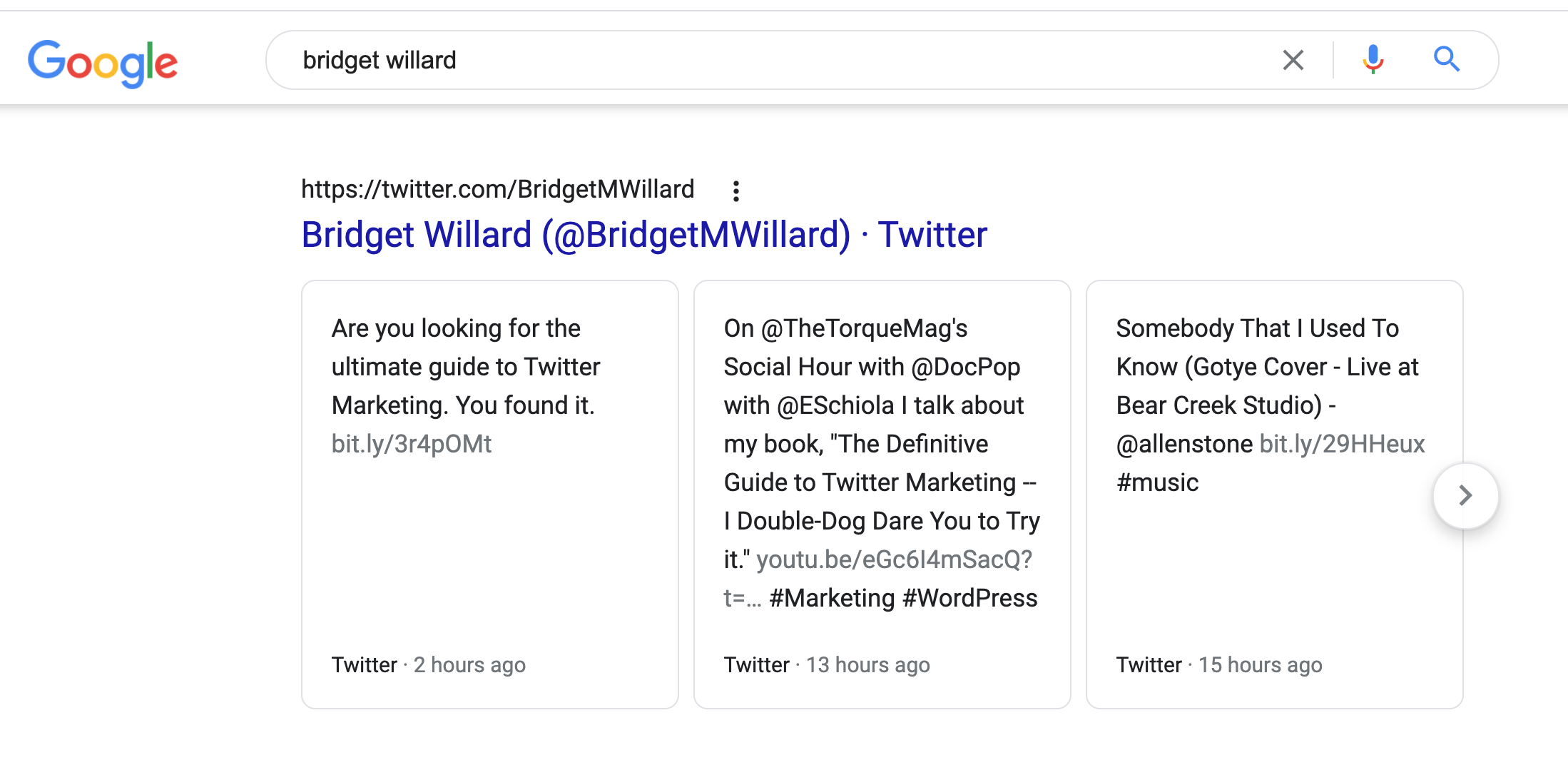
    Tweets Show in Google Search Results

    Over the years, I’ve seen tweets appear in search results. Frankly, I’m surprised more SEOs don’t talk about the importance of Twitter as a ranking signal. In what context do it happen in many different ways.

    Google yourself. Set up Google Alerts for your name, products, and website. When you get those emails, you’ll see tweets that are trending. When I was looking up Lunar New Year, I saw tweets that showed up as a carousel in the SERPs. 

    The following screenshots show what may show up for searches that include, Bridget Willard, Spurs, Warren Laine-Naida, COVID, and Gatsby. Click on the image to open it up in a lightbox.

    Local SEO Matters, Too

    So, when you’re approaching marketing online, in order to be found in your local community, there is a bunch of things that you need to do. Okay? Make sure Google My business is loaded. If you’ve seen any of the videos with Warren Laine-Naida, you’ve heard us talk about that. Make sure that you have reviews sites, um, and claim your profiles. Not just Yelp and not just Google My Business. Go on TrustPilot.com. They have a free account. You can get and go claim your business there.  Google wants to see that you’re active and participating. This is another reason why Twitter is a great way to get that feedback. 

    Twitter is Great for Research

    Also, when you’re researching your community and your industry on what people are thinking, where are they talking about it? They’re talking about it on Twitter. They’re talking about Spaces on Twitter. They’re talking about Clubhouse on Twitter. They’re talking about TikTok on Twitter. Twitter is where everybody talks. It’s great for market research. It’s great for following people in your industry. It’s fabulous for following people who are local to you making those handshake business relationships in your community. 

    So what do you have to lose? If you want to learn to do that. Also on amazon.com is “The Definitive Guide to Twitter Marketing.” It goes through every single thing you need to know about how to use Twitter for your business. Um, how to gain followers the right way. How to list people. How to share your blog posts. I mean, this is really key. 

    One of my realtor clients finally agreed use Twitter in addition to Facebook, and the impressions alone were worth the move. The impressions alone were worth the move. How about Facebook reach of 400 and Twitter averaging 4000?

    Start Using Twitter to Be Found Online

    Twitter is a big part of your SEO strategy because individual tweets are indexed by Google. A healthy Twitter account is a great ranking signal. It shows them that you’re active. Why not try it? What could you lose? 

    If you’re not sure how to get started, this blog post lines out how to set up your Twitter account