
One of the questions I was asked during my recent appearance on Elevate & Examine was about reactive marketing. Why do companies abandon their strategy the moment a competitor launches something new?
My answer was simple: fear.
Why did the Board of Apple want Steve Jobs to just ship it incomplete? Because IBM already made a personal computer. What was the board afraid of? Losing money.
Fear convinces us that someone else’s success automatically means our failure. It encourages us to copy tactics we don’t understand, chase trends we didn’t choose, and compare our business to someone else’s highlight reel.
The problem is that none of those things build a stronger brand.
Attention Is Easy
Attention isn’t difficult to earn.
- You can be outrageous.
- You can be controversial.
- You can jump on every trending topic.
- You can try to become the funniest brand on social media.
But attention alone doesn’t build a business and it definitely doesn’t build a brand. I think about all of the TikTok creators whose videos I end up watching on Reels. I couldn’t tell you any of their names. I might say, “oh, that’s the ‘f this house’ guy.” Maybe I remember it’s Derek something. He’s a comedian. And if I really want to know I can do a Google Search.
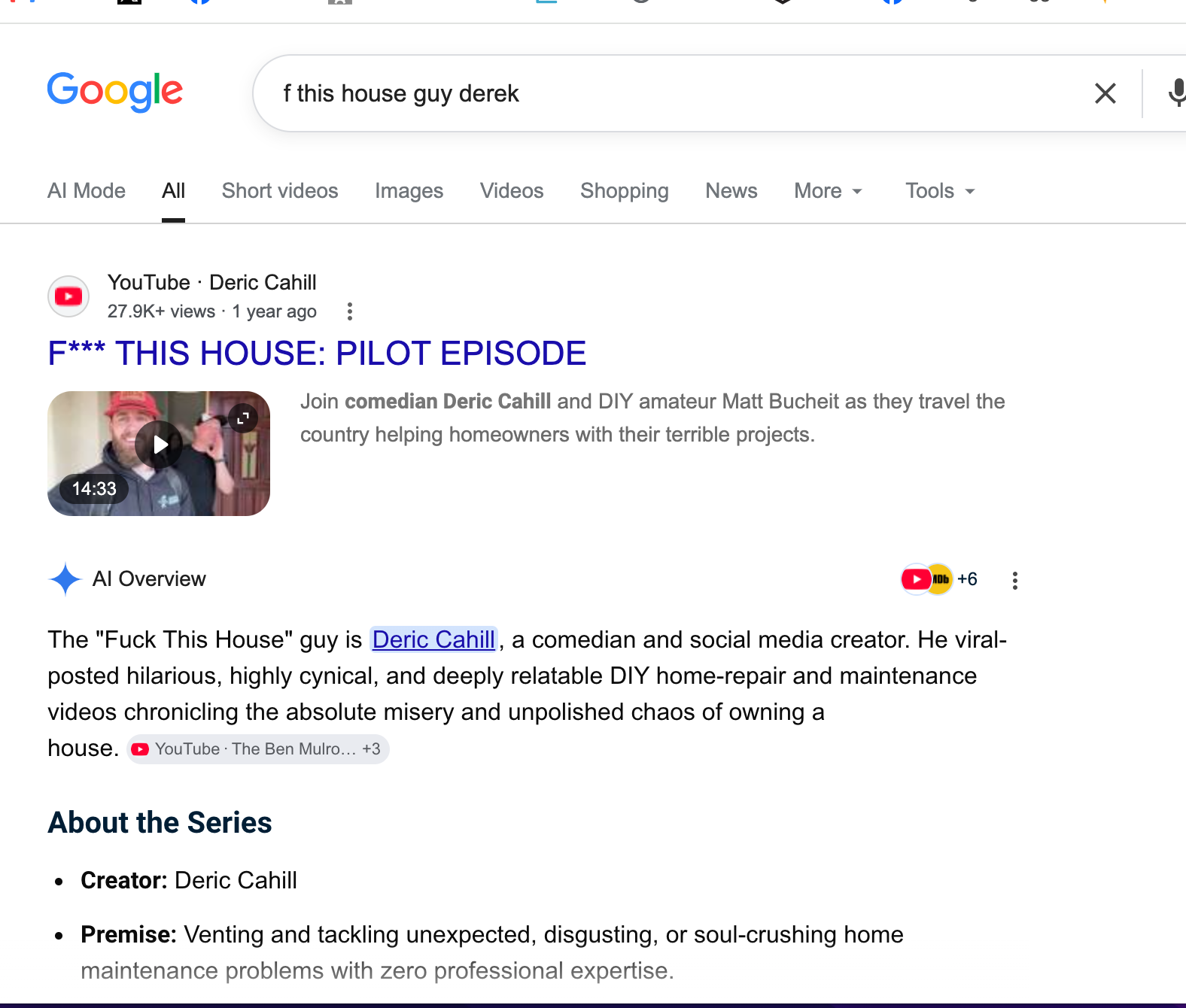
Oh okay, it’s Deric Cahill. But – and this is a big but – is the average consumer going do the search? And then, what’s the next step?
You would have to really love the channel, subscribe to it, and become a member, like I am with The Tiny Chef Show. But even when I tried to find it on Instagram, I presumed it would be @tinychefshow. It’s not.

When you’re asking someone to trust your company, download your software, book a demo, or hand over a credit card, attention isn’t enough. You need something far more valuable. You need recognition.
There is no point in creating content if it isn’t memorable and, more importantly, ties to your brand. And your brand, and all of its mission, should be linked to your business (financial) goals.
Recognition Builds Trust
People don’t buy because they noticed you once. They buy because they recognize you. This is why I largely suggest doing organic marketing before dumping money on ads. Unless, of course, you just need a quick hundred sales of your 3D-printed product and that’s the end of it. If I can’t find your planter company after watching your reels, then how am I going to order.
Now, this is just me inserting my own customer experience. I’m not even going into the weeds of how difficult it is to be recognized and trusted in B2B.
Recognition means your audience knows what you stand for. They understand what problem you solve. They know what to expect every time they interact with your brand.
That’s why I often tell SaaS clients:
“You don’t need attention. You need recognition so that you can build trust.”
Consistency creates recognition.
Recognition creates trust.
Don’t Chase Competitors
One of the biggest mistakes businesses make is assuming they know why competitors are doing something.
You don’t. You don’t know their revenue goals. You don’t know their marketing budget. You don’t know whether the campaign is succeeding—or simply spending the budget that would otherwise disappear next quarter. Looking at competitors without context often creates unnecessary anxiety. There’s no way of even knowing if your theories are right.
They may even be dumping money because they want to reduce their tax liability, which is something that Rand Fishkin and I discussed in 2021. Heck, they could be laundering money. Focusing on your competitors is a waste of mental energy at best.
Instead of asking: “Why are they doing that?”
Ask: “What are we trying to accomplish?”
That’s a much healthier question.
Your Strategy Is Your Filter
Every organization should have a written marketing strategy. Every idea should be evaluated against it. When I worked for ThoughtHouse we called these Marketing Briefs.
Ask simple questions:
- Does this support our business goals?
- Does it help our customers?
- Does it reinforce our positioning?
- Would we still do this if our competitor hadn’t done it first?
If the answer is no, it probably isn’t strategy; it’s a reaction.
Recognition Leads to Sales
One of the ideas I shared during the conversation is a framework I’ve returned to for years:
Recognition → Trust → Affinity → Loyalty → Sales
Marketing isn’t simply about generating awareness It’s about creating familiarity. People rarely buy from brands they’ve never heard of.
They buy from brands they recognize. They buy from brands they trust. Everything else becomes much easier after that.
Build the Brand You Want to Be Known For
The internet rewards novelty. Businesses reward consistency. Those aren’t always the same thing.
If your marketing strategy depends on reacting to every trend, you’ll constantly feel behind. If it depends on building recognition over time, you’ll develop something much harder for competitors to copy.
That’s the difference between chasing attention and earning trust. And trust is what ultimately grows a business and a brand.
Listen to the Podcast
Listen to my conversation with Anthony Gaenzle and Natalie Young on Elevate & Examine below.
Great Quotes from Bridget Willard
25:45 “What you can control is internal communication, internal documentation, internal strategies, whether or not you’re accomplishing your goals according to your own business and marketing plan. Everything else is just a mirage.” — Bridget Willard
28:39 “You don’t need attention. You need recognition so that you can build trust.” — Bridget Willard
30:34 “This is your map. This is your rubric. Is this aligned? Yes or no?” — Bridget Willard
34:08 “Experiment. Test. Rewrite. Iterate.” — Bridget Willard
38:01 “What problem are we actually solving?” — Bridget Willard
38:52 “You can still dunk in the dark.” (Oreo’s famous Super Bowl marketing moment.) — Bridget Willard
41:25 “Your audience is your responsibility.” — Bridget Willard
42:09 “The perception creates reality for the customer.” — Bridget Willard
47:32 “Ask somebody who won’t agree with you.” — Bridget Willard
50:53 “Recognition leads to trust. Trust leads to affinity. Affinity leads to loyalty. Loyalty leads to sales.” — Bridget Willard
55:04 “There’s not enough doing.” — Bridget Willard
56:26 “Change your whole mindset on what success means to you.” — Bridget Willard
58:04 “Don’t give up. Never, ever give up.” — Bridget Willard
59:19 “If you don’t apply, you’ve already said no to yourself.” — Bridget Willard
Full Transcript
Anthony Gaenzle (00:00:00):
Welcome back to Elevate and Examine. This is the show where we discuss topics that help leaders and creators face the challenges of life and business and, and help them thrive despite those challenges. I’m Anthony Gaenzle, founder of E&I Creative, and I’m here with my amazing co-host, Pastor Natalie Young, who is the founder of the Examine This Moment blog and, and does so many other things, content creator, just, just for one of them. Uh, how, how are you today, Natalie? Do you wanna add, uh, add some things to that list? <laugh>
Natalie Young (00:00:33):
<laugh> I’m doing wonderful. I know, uh, everyone’s probably pretty busy this summer. Uh, just finished, uh, coming back from San Diego Comic-Con, so, uh – Oh, awesome. Uh, that was like a quick turnaround from, uh, West Coast to East Coast. So, uh, feeling a little jet lagged. <laugh> But I’m excited to be here. <laugh>
Anthony Gaenzle (00:00:54):
Well, you, you always bring the energy and the, and the great advice no matter what, so we’re looking forward to it.
Natalie Young (00:01:00):
Thank you, Anthony. I’m, I’m excited.
Anthony Gaenzle (00:01:03):
Perfect.
Anthony Gaenzle (00:01:04):
So today, we’re diving into something that affects just about every business owner, every creator, every leader at some point. It’s that moment when your strategy becomes reactive. And it’s not, not in a good way as we’ll, as we’ll talk through as we, as we move forward through the conversation. It’s such an important chat because we’ve all seen this happen. Maybe, maybe we’ve lived it out ourselves. We’ve seen others have this happen to them. Things are moving along. You have a plan. You have direction. Everything’s great, but then suddenly something shifts, whether a competitor does something, a, a trend starts taking off, uh, platforms change, social media changes all the time. We, we all, you know, those of us who have been on X for a long time, especially since it was Twitter, have seen that happen quite a bit.
Natalie Young (00:01:53):
<laugh> Um,
Anthony Gaenzle (00:01:53):
y- your sales dip, engagement on your content drops, the pressure builds up. Before you know it, you’re not leading with intention, you’re just reacting to things and just trying to stay afloat, stay above the, the water. That’s never a good position to be on, uh, be in.
Anthony Gaenzle (00:02:13):
So to help bring more perspective to this topic, in addition to our chat to kick off the show, as always, we have a fantastic guest joining us later. We have Bridget Willard, who is a SaaS marketing consultant. She has deep experience helping brands think more strategically about marketing, about content and communication. You’re likely familiar with the content she posts here in X, which is always, always engaging and, and valuable. So stay tuned for that. Lots of excellent insights forthcoming in that segment.
Anthony Gaenzle (00:02:44):
But let’s kick things off with our, our first segments as, as always.
Anthony Gaenzle (00:02:48):
So this topic really matters because reactive strategy can be sneaky. A lot of times, it doesn’t feel reactive in the moment. It just feels like something’s urgent, something nece- necessary. It feels like, you know, you start thinking, “We’ve got to do something about this right now.” Doesn’t, doesn’t feel reactive quite yet, but it’s getting there. Sometimes you do need to act quickly, but there’s a big difference between being responsive and being reactive. And to me, strategy, your strategy, your business strategy, your content creation strategy, your social media strategy, those things become reactive the moment you stop asking, “Is this aligned with what we’re doing?” And you start asking things like, “What are they doing? How, how fast can we copy it? What’s that cool new trend that’s going on there? And how can we just do that same thing and, and make an impact out of it?” And that’s where we get into trouble.
Natalie Young (00:03:49):
Mm-hmm.
Anthony Gaenzle (00:03:50):
I think one of the clearest places we see this is, is in marketing, especially. Company sees a competitor trying something new. They see a trend getting attention. They feel like they have to jump on it immediately, not really necessarily because it fits their audience, not because it supports their long-term positioning, but they’re just afraid of being left behind. So you see all these. And you see these all the time. You know, let’s look at the, the Coldplay concert where the people got caught, uh, cheating on their spouses. That, that every brand everywhere and every person was posting some sort of spin on it, and it just got old really quickly.
Natalie Young (00:04:26):
Mm-hmm.
Anthony Gaenzle (00:04:27):
So, I mean, Natalie, I know, I know you’ve seen this too. Why do you, why do you think so many businesses fall into that trap of copying competitors or tracing trends instead of, you know, staying grounded in their own strategy?
Natalie Young (00:04:39):
Honestly, I have a few thoughts on this. You know, I think, um, number one, there’s pressure to keep up. You know, there’s this pressure that to, you know, everyone wants to match what others are doing instead of focusing on their own strategy. Um, and, uh, next, I think part of it is the fear of missing out. The fear of being left behind, uh, can lead businesses to pursue trends that don’t even fit their first mission, like why they started what they’re doing. Um, perhaps there’s unclear vision. Without a clear vision, every idea can seem like the right opportunity. So you can be all over the place. Um, there’s a.
Natalie Young (00:05:25):
Now, this one’s big for me. I really, um, see this, I think, so often. I think this is something we’ll talk about more, uh, later on as well in our discussion is, you know, this comparison over conviction. Um, too many people are, um, so quick to copy, um, because they’re comparing what, who they are to their competitor that, um, this comparison is leading them in a direction outside of who they really are. Um, and they’re, they’re willing to go on that route.
Natalie Young (00:06:01):
Um, next part that I wanna bring out is chasing quick results. Many businesses sacrifice long-term growth in pursuit of immediate success. They want, like, things fast, quick. So the strategy is not, like, a long-term though. It’s just like, no, it’s, um, they’re willing to sacrifice a long-term growth if it’s go, if it’s not gonna lead to a quick succe- success.
Anthony Gaenzle (00:06:31):
Mm-hmm.
Natalie Young (00:06:32):
Um, and then, um, I think, you know, also sometimes it’s listening to too many voices. Too many outside influences are distracting the vision and the purpose of your pursuit in your business. So, you know, one, one thing I wanna, like, really, like, hone in here and just say this, this statement before we move to the next, uh, part of our discussion is that, you know, successful leaders don’t chase every trend. They evaluate opportunities through the lens of their mission, their values, and their long-term vision.
Anthony Gaenzle (00:07:14):
Yeah. Yeah. You na – you nailed it with those things. Sometimes it’s, it’s one of those. Sometimes it’s a combo. Sometimes it’s, it’s all of those things. Mm-hmm. And a lot, a lot of businesses don’t just copy because they’re lazy. Some do. I mean, that’s definitely a factor. <laugh> m.
Natalie Young (00:07:29):
Mm-hmm.
Anthony Gaenzle (00:07:30):
But a lot of them copy because of the things you mentioned, because they’re uncomfortable, because they feel pressure, they, they feel uncertainty. Sometimes they’re not really even confident, especially with newer brands or, or older brand, brands that have been around a long time, and they, they need a change, but they can’t figure out where. They, they don’t really even understand what makes them different. So instead of –
Natalie Young (00:07:53):
uh-huh.
Anthony Gaenzle (00:07:54):
Trying to stand out, they just borrow what looks like it’s working for someone else. And that typically leads to challenges because the problem is if your strategy is built on imitation, it, and it ends up accidentally.
Anthony Gaenzle (00:08:10):
I mean, I, I wouldn’t assume most of businesses wouldn’t do this intentionally, but it ends up accidentally weakening your identity instead of strengthening it. So if every move you make is based on what someone else is doing, then you’re letting someone else really shape your positioning and tell your story. And that’s never good because they’re not gonna tell it the, the right way.
Natalie Young (00:08:30):
Mm-hmm.
Anthony Gaenzle (00:08:30):
Long-term, it’s also exhausting. It burns you out when you’re trying to be someone you’re not. And I always, you know, this is a personal branding thing, like, that I tell people, my, my personal branding clients that are looking to build their own personal brands. I tell them, you know, y- you, the, the easiest thing to be is you. Figure out the, the unique and amazing things about you and, and amplify those. Trying to be someone else is, is exhausting.
Anthony Gaenzle (00:08:54):
And this goes for companies that, and their brands as well.
Natalie Young (00:08:57):
Mm-hmm. Yes.
Anthony Gaenzle (00:08:58):
I’ve seen a, a lot of brands completely lose their voice because they spend too much time trying to sound like the market instead of sounding like themselves. And sometimes they don’t even know what sounding like themselves means. So it’s a, it’s, it’s okay. It’s, it’s, it’s important to learn from the market. You can borrow bits and pieces of it. But the, it’s really, there’s a real difference between learning from the market and being controlled by it. Learning from the market and applying the things that work for you are great. But panicking because you’re trying too hard to mimic the market is where your strategy kinda begins to unravel, becomes, uh, reactive, and, and reactive strategy rarely is good. So, you know, to me, one of the best antidotes to, to reactive strategy is really having a clarity around your long-term positioning.
Anthony Gaenzle (00:09:45):
Knowing what you stand for, knowing who you serve, knowing what you want to be known for. Because then, then those things, when those things are clear, you don’t feel the same need to really chase every passing wave. You, you can adjust, you can evolve, you can test things, but you do it from kind of a grounded place more so than a frantic one.
Anthony Gaenzle (00:10:06):
And, and it, it connects to leadership too, because, you know, reactive strategy usually doesn’t start with, with tactics. It, it starts with emotion. You, you, you know, the fear, the anxiety, all the, all the bad things that you’re not supposed to let, uh, sway you as a leader. It starts with comparison. It starts with questions like, what if we’re falling behind? And, and other scary questions like that. And it’s very human, but we need to be careful and, and it can lead us into some bad, bad decisions.
Anthony Gaenzle (00:10:35):
Don’t you think, Natalie?
Natalie Young (00:10:37):
Absolutely. Absolutely. Absolutely. You know, I think, uh, one of the things that, you know, I wanna bring out even on, on just the though of, you know, the urgency that’s driving the leaders to, you know, uh, react in this way and make quick decisions. Um, these rush choices can, um, you know, cause you to, uh, burn out and make very poor decisions and even have a missed opportunity or even, um, you know, not have that sustainable growth. And I think that’s, that’s the part about what we’re talking about that’s really important. Because if you stay consistent in who you are, yes, you’re comparing because you’re looking at what o- others are doing, but don’t easily just copy what they’re doing. Consider how, what changes can you make without just this quick response that could affect you in a negative way.
Anthony Gaenzle (00:11:45):
For sure. Yep. That’s, that’s so true. And, you know, when that, when that feeling of urgency takes over, your, your decision-making gets clouded as a, as a leader, you know, content creator, business owner, whatever, whatever you call yourself or consider yourself or what the world considers you, you can start making moves that simply are designed to relieve the pressure in the short term. And, and those end up really creating confusion in the long term. You know, when you’re, when you’re making moves driven by short-term relief, it can lead to making mistakes by pivoting unnecessarily, killing your momentum.
Anthony Gaenzle (00:12:23):
One of the hardest things in business is learning that not every uncomfortable moment requires an immediate pivot. You know, sometimes the smartest move is just pause. Take that moment. Ask –
Natalie Young (00:12:36):
uh-huh.
Anthony Gaenzle (00:12:36):
Better questions like what is actually happening here? What are we really reacting to? Is it, is there a real strategic need here?
Anthony Gaenzle (00:12:45):
Are we just reacting out of fear? What will this even mean for us in six months, a year or so down the road if we follow this path? Will it, will it throw us way off course? Will this be a good decision? You have to ask these questions and, and taking that pause can really help save you from some really bad decisions.
Anthony Gaenzle (00:13:05):
So to our listeners, I’d, I’d just say this. If you feel pressure to change direction, before you do that, just make sure you know whether that pressure is coming from wisdom or it’s coming from a, a place of panic because, you know, not every loud moment deserves control over your strategy. So –
Natalie Young (00:13:24):
uh-huh.
Anthony Gaenzle (00:13:25):
So Natalie, I, I think this, this feels kind of like a perfect place to shift into your segment and dig deeper into kind of the difference between urgency culture –
Natalie Young (00:13:32):
uh-huh.
Anthony Gaenzle (00:13:32):
And intension, intentional growth. So I’ll, I’ll shift it, shift the mic over your way. I’ll virtually toss it over to you. <laugh>
Natalie Young (00:13:39):
<laugh> Well, thank you, Anthony.
Anthony Gaenzle (00:13:41):
<laugh>.
Natalie Young (00:13:43):
Um, I wanna bring out just a few points because, um, again, this is such a, a, a great topic of, um, discussion. Um, I wanna talk about first the emotional reactions, you know, and what we’re talking about. Every leader is gonna experience emotions. They’re gonna have, um, especially during challenges, um, any type of criticism or unexpected setbacks. Um, it’s often, uh, a test of w – how they’re gonna respond. You know, how, how, how will we respond when we’re facing criticism, disappointment, conflict, unexpected setbacks? You know, what, what are we gonna do about facing these things? Um, and, and these, uh, are true feelings. So this is why, as you just mentioned, uh, an emotional response, uh, will lead you to, um, anxious ways. So you have to be wise in your response, uh, to maintain your strategy. So before responding, I’m just reiterating this point.
Natalie Young (00:14:49):
I think this is so important. What am I feeling? Why am I feeling this way? Is my response being shaped by wisdom or by my emotion? And then you have to take time to distinguish this. Um, these emotional-driven decisions can damage, um, even relationships that you have in business. They can create unnecessary conflict. They can lead to regret. Um, so these w – this is why it’s important that we keep all of this in mind. Um.
Natalie Young (00:15:20):
So healthy leadership isn’t about never feeling emotional. It’s about learning to steward those emotions well. And when we respond thougtfully instead of react impulsively, we’re gonna, we’re gonna be able to continue to build, strengthen relationships, and create an environment where people feel heard, valued, and respected. So, you know, we talked a little bit about pausing, you know, pausing before we pivot. Not every obstical, obstacle that we’re facing in business as a creator, uh, wherever we find ourselves right now, not every obstacle is a sign that it’s time to change direction. Sometimes we just simply need to pause, reflect, gather information, and evaluate before making a significant pivot.
Natalie Young (00:16:10):
And then the next point I wanna bring out is discernment. We h – we have to keep that discernment in every decision that we’re making, because when we’re making these eval- evaluations regarding opportunities, recognizing distractions, seeking wise counsel, and making these, these decisions, we’re gonna recognize, wait, is this lining up still with my mission, my values, and my long-term, um, goals that I’ve set in place?
Natalie Young (00:16:43):
And then this part I wanna bring out, too, is protect vision during pressure. So when you’re having all these voices, when you’re seeing your competitors do better than you at that point, when you feel like people are, um, disregarding, uh, where, where you’re going, pressure can tempt you to compromise your values and abandon who you are in what you’re doing in business. So keep focused on your vision, guard against distractions, and continue going forward.
Anthony Gaenzle (00:17:19):
Want wise advice?
Natalie Young (00:17:20):
Those are my main points. <laugh> uh-huh. <laugh>
Anthony Gaenzle (00:17:23):
Very wise advice. And I, I think those are good points to, to take note on, uh, as a leader. You know, emotional intelligence is so important. I just gave a presentation on that few weeks back, and it was, you know, as I was prepping for the conversation, I had, and I was able to reflect on my own, uh, you know, where I stand in, on, on that, on that range of emotional intelligence. And none of us are perfect. We all have room to, to grow there as, as leaders, as content creators. Um, and, and, you know, you make some really, really important points.
Anthony Gaenzle (00:17:53):
And I think at this point, I’m, um, I, it’d be great to bring our, our, our guests in here and, and get her feedback on what we’ve been discussing so far, throw our traditional questions out there. So let’s, uh, without further ado, I’m, I’m honored to introduce our special guest speaker for the day, Bridget Willard.
Anthony Gaenzle (00:18:14):
Again, Bridget is a SaaS marketing consultant who helps brands think more strategically about how they show up, about how they communicate, how they create marketing that, that actually connects. She has a, a really strong perspective on content, positioning, sustainable marketing, which, which makes her an, uh, a perfect fit for today’s conversation. So, uh, Bridget, welcome to the show. We really appreciate you joining us today.
Anthony Gaenzle (00:18:48):
Bridget, are, are you there?
Bridget Willard (00:18:49):
Thanks for having me.
Anthony Gaenzle (00:18:50):
There you Go. <laugh> Um, we are happy to have you. Thank you so, so much. I know we’ve been connected for quite a while here on X, and, and we’ve never had a chance to actually talk, um, using our, our voices, so it’s great to actually talk with you today.
Bridget Willard (00:19:06):
Absolutely. And I love this, I love this topic because for my whole life, I’ve told myself, wait, for my whole adult life –
Anthony Gaenzle (00:19:15):
<laugh>.
Bridget Willard (00:19:16):
I’ve been telling myself this mantra, “respond, don’t react.” Mm-hmm. Respond, don’t react. Because a reaction is emotional, and it. I know it feels like platitudes that are coming top down and high level, 40,000 feet. But when you start feeling those emotions, like Natalie mentioned, when you’re starting to understand that, then you’re like, okay, let’s just take a second and make a plan.
Anthony Gaenzle (00:19:49):
Mm-hmm.
Natalie Young (00:19:50):
Mm-hmm.
Anthony Gaenzle (00:19:52):
Yep. And then when you take that step back, you make the plan, and you’re not just rushing in headfirst. You <laugh> avoid a lot of the problems that, that pop up when you take that other approach. And I think a lot of businesses, um, you know, a lot of, a lot of leaders especially are not equipped with the, the emotional intelligence to make that shift, unfortunately. So we see the, the case studies where businesses collapse because the leadership was, was reactive and more than responsive, and, and it’s just, you know, you, you have wise words to kick things off there.
Anthony Gaenzle (00:20:26):
So I’m looking forward to more of that insight. And as we move into this segment, essentially, on each episode, for those of you who, who’ve been tuned in to our past episodes, we ask our guests five questions that are designed to really help our listeners grow as, as leaders, as, as creators, as entrepreneurs. Um, so I just wanna dive in and, and ask you a few questions that we put together that, that I think you’ll, you’ll bring some excellent insights for, for our listeners. And, and the first one I wanna start with is a lot of businesses start reacting the moment they see competitors doing something new.
Anthony Gaenzle (00:21:05):
So from your perspective, why does some, so many companies fall into kinda competitor-driven marketing instead of staying rooted in their own strategy and looking to, to improve from that, from their own organic space?
Bridget Willard (00:21:19):
In one word, Anthony, that would be “fear.” Uh, that we forget that we see. This is comparing yourself to your neighbors, too. There’s an assumption that Steve is doing much better than you because he just drove up in a, in a brand new whatever your dream car is, right?
Anthony Gaenzle (00:21:39):
<laugh>.
Bridget Willard (00:21:40):
But you don’t know that he had to leverage himself in order to get this job, this new sales job, right? He, you don’t know what their actual business goals are. You don’t know what their revenue is. You don’t know what their expenses are. And so, uh, when I talk to my clients, I always say, “There’s no point in looking at a competitor or even the, the visual part of their tactics online because we don’t know why they’re doing it.”
Bridget Willard (00:22:16):
I was, uh, and I had the joy of interviewing Rand Fishkin a few years ago about Facebook and is it too big to quit and advertising and whatnot.
Bridget Willard (00:22:25):
And he brought up a really good point, something that I’ve thought about a, a lot as well, is there are a lot of big brands that dump money, or even new startups with their sweet, sweet, Ycombinator cash, that dump money on Google Ads, PPC, Facebook Ads, Meta, um, any kind of program, uh, programmatic advertising, all of that, because their only goal is to “grow or die.”
Bridget Willard (00:23:01):
On top of that, on top of that, you don’t know what they’re trying. You know, when you get, when you get money in the federal government, right? You have a budget. If you don’t spend all that money, I learned when I worked for the government as a teenager. If you don’t spend all of your budget, you don’t get it. It’s the same when a department is trying to justify their budget. So a lot of times, they will overspend on advertising.
Bridget Willard (00:23:30):
I separate that in my own mind from marketing. Um, because it is a business expense, and it does ultimately reduce their tax liability.
Bridget Willard (00:23:41):
A publicly traded company wants to make profit. Their only, um, fiduciary duty is to the actual shareholders, not to the employees, not to the customers. So the dynamic changes. You may see w – someone who you think is a competitor, but you don’t know if those strategies even work, or more importantly, if they care that they work.
Anthony Gaenzle (00:24:11):
<laugh>.
Bridget Willard (00:24:12):
Right? And not everything has a direct at- at – you know, you – attribution, you know? Like, I’ve talked many times about the parable of 7-Eleven and a Clear Channel billboard of Diet Coke. There’s no way of reporting if that subliminal message made me decide to pull into 7-Eleven and buy a Diet Coke. But it’s – but Coca-Cola is still spending millions and millions and millions of dollars on outdoor advertising.
Bridget Willard (00:24:44):
As digital marketers, you and Anthony, you know, like, this is, like, what?
Anthony Gaenzle (00:24:50):
<laugh>.
Bridget Willard (00:24:50):
You can’t attribute that because marketers always have to justify their jobs to the salespeople. Internally, our competitor is the sales department instead of it being our partner. Because what we’re competing for internally is budget, resources, employees, time, all those things.
Bridget Willard (00:25:12):
So when they’re looking outward at the competitor, right, I like to remind them, “You don’t know if that works. You don’t know if they’re just trying to burn money. Are their customers your customers? No. Are they even really your competitor? Because maybe you don’t even have the same demographic. You might have an overlapping demographic if you made a Venn diagram. But is there enough room in the whole mark – You- you’re just looking at something else you can’t control.
Bridget Willard (00:25:45):
What you can control is internal communication, internal documentation, internal strategies, whether or not you’re m – accomplishing your goals according to your own business and marketing plan. Those are the things you can control. Everything else is just a mirage, you know? It’s the highlight reel.
Bridget Willard (00:26:07):
Kind of like when we go, you know, I was just listening to s- some old podcasts of mine. I don’t know. I got down this rabbit hole. And I was like, in the last 10 years that I’ve been a widow and single and th – wanting to get married, people have gotten together, gotten married, and gotten divorced. And then I say, how come God hates me? Well, maybe they just jumped too fast. You know, hire, slow, fire fast. <laugh>.
Anthony Gaenzle (00:26:36):
<laugh>.
Bridget Willard (00:26:36):
You know, it’s easy to say, why is that person doing better than me? But you don’t even know that they are doing better. Instead, focus back on what you’re doing. That’s the, the trick is don’t look at what they’re doing. It’s none of your business. Look at what you’re doing and stay focused on what your goals are and keep going forward.
Anthony Gaenzle (00:27:03):
Yeah, I think we, we tend to see that big, shiny thing, whether it’s an advertising campaign or whether it’s, you know, our, our, our neighbor or a friend doing something we wish we were doing. And we all automatically assume, and social media is a big, big villain here because you see the highlight reels of everybody. We automatically assume that that life is great, that business is thriving. But we don’t think about the fact that there’s a lot of stuff going on behind the scenes that we don’t see. Is, is that advertising campaign actually working? Is it actually appealing to the people that we wanna appeal to? You know, we, we go spend, match that billion dollar spend. Turns out it wasn’t even appealing to the people we wanna appeal to, and suddenly we just threw, donated, uh, billion dollars to whatever ad company we, we ended up working with.
Anthony Gaenzle (00:27:52):
So you’re 100% right. And I think human nature, we’re, we’re guilty of, of thinking the grass is always greener, but it’s, it’s certainly not. And we, we need to look in- internally first in, in a lot of ways.
Anthony Gaenzle (00:28:07):
So with that in mind, you know, chasing these trends, we see these things happening, we see this value out there. Chasing the trends can create short bursts of attention, but they don’t always lead. Those short bursts don’t always lead to long-term value. So when you’re talking with brands, when you’re talking with your clients, how, how do you help them discern the difference between a smart opportunity and just something that’s sort of a distracting trend that’s gonna waste money or, or send them floating off course?
Bridget Willard (00:28:39):
I feel like I’ve been talking about this subject for 20 years, Anthony and Natalie. <laugh> I, it’s easy to get attention. Attention is a very easy thing to get. As a woman, it’s a very easy thing to get. All you have to do is wear a low-cut something something or high-cut shorts.
Anthony Gaenzle (00:28:56):
<laugh>.
Bridget Willard (00:28:57):
You know? Um, you can get, get attention by being silly, ridiculous, all those things. But is it the right attention? So I talk to my SaaS clients and I say, “You don’t need attention. You need recognition so that you can build trust.” You’re asking people to spend money and give you their credit card for your vibe-coded s – piece of software, right? This is, you’re asking pe – This is serious now.
Bridget Willard (00:29:25):
And it’s, it’s interesting because, yeah, it’s fun. If there was, like, just a Slack group with all of us marketers and we could just be in there and get it out of our system, sure. And, and I, I’ll admit, even I jumped on the two people on top of the Empire State Building, you know, who proposed marriage to each other, and they had this big old flag that had way too many words on it. They needed a marketer to edit that, that’s for sure.
Anthony Gaenzle (00:29:57):
<laugh>.
Bridget Willard (00:29:57):
But the thing is that, you know, What did that do? What does that do for your brand? So this goes back to having a marketing strategy, a written document, your brand guidelines that are all aligned with your actual business goals. This is your map, this is your rubric, this is what you check it against. Is this aligned? Yes, no. Is it gonna get you further? Yes, no. And it could just be a waste of time and have a neutral effect on your brand. What could you have done instead?
Bridget Willard (00:30:34):
You know, I’m, I’m honestly kinda surprised that insurance companies, um, if we’ve all watched Super Bowl commercials, or any kind of sports, you’ve got all the insurance companies that have all these ridiculous, funny, fun ads.
Bridget Willard (00:30:49):
They’re funny, but is that what you really want to promote when you’re dealing with your home life and auto, right? Life insurance people don’t do that. Auto insurance does it because it’s relatable that you, you know, you, you’re meeting with “Mayhem like me.” You should have picked Alls- Allstate instead of letting Bevo out. <laugh> You know, it’s funny. It’s entertaining because you’re on TV. So on TV, where people are easy to click away or not even click anymore, mute and pick up their second, third screen, you have to be entertaining. You have to be.
Bridget Willard (00:31:31):
But if you’re a local business, I don’t think you have the social or brand capital to waste on that. When I was doing social for Riggins Construction & Management, like circa 2006, so that’d be like 2009 to 15, there were a lot of memes and whatnot, and there was a whole thing with Wendy’s and McDonald’s.
Bridget Willard (00:31:55):
I don’t know if y’all remember that. Yes.
Anthony Gaenzle (00:31:56):
<laugh>.
Bridget Willard (00:31:56):
We went back and forth and back and forth.
Natalie Young (00:31:59):
Mm-hmm.
Bridget Willard (00:31:59):
But again, these are giant corporations with tons of money. Uh, they don’t have anything to risk. You, as a business owner, put a second mortgage on your house to keep going because you’re, you, you know. This was during the 2008, –09 housing crisis. We’re still, we’re, you don’t have enough money. You don’t have enough, um, runway financially to even take a risk on somebody not trusting you because humor is very tricky.
Anthony Gaenzle (00:32:36):
Yes it is.
Bridget Willard (00:32:36):
Especially with business. I mean, think about the professional comedians. So I used, I watched it. I’m obsessed with standup. So I saw a documentary on the improv and everybody said, “We, we did our four-year degree. It was doing standup four or five nights a week at The Improv for four years.”
Anthony Gaenzle (00:32:54):
<laugh>.
Bridget Willard (00:32:55):
Because it takes a long time to find your voice. Now, these are professional writers who have writers on their team, right? And you’re trying these jokes out in real time and you’re getting real time feedback from the audience. In the same way we do this on Twitter or X.
Bridget Willard (00:33:15):
So when I was with GiveWP, we would test things out on X. We’d have an idea. I’d ask my boss. He’d be like, “Let’s just do it.” If it got, if it got the response we wanted, then we would use that for our advertising campaign. Then we were like, “Okay, let’s spend some money on that.” And it actually did work. We did that. We, um, we started, um, the Have Fun at WordCamp campaign. We called it the Hello Campaign. And in WordCamps we weren’t at during Friday, Saturday, and Sunday, because it was a WordPress plugin. We spent money just in those geographical areas. And we saw from Google Analytics a rise in sales from those geographical areas for two weeks fi – after that three-day push on X.
Bridget Willard (00:34:08):
So yeah, experiment, test, rewrite, iterate. rewrite, iterate. But the goal is still for SaaS, I need you to download my software. I need you to book a demo. I need you to put your credit card in here and become a customer. So you c – you don’t. When you’re asking people for money, I don’t think it’s good to be funny, and I didn’t mean to rhyme that. <laugh>
Anthony Gaenzle (00:34:31):
<laugh> It worked, it worked for you though. It worked.
Natalie Young (00:34:34):
<laugh>.
Anthony Gaenzle (00:34:37):
That’s A, that was a, that was a good way. I mean, I’m, I’m gonna, I’m gonna as- assume knowing you that that definitely wasn’t, wasn’t planned, but it, it was a smooth transition there for sure. <laugh> And, and, uh, and, and I agree. I mean, you think about local businesses and, and you look at, like, uh, two competing home remodeling companies. No one’s gonna be looking for a, a local. You know, I’m in Lancaster, Pennsylvania. No one’s like, “Did you see the latest feud between John’s Home Remodeling and Greenwood Home Remodeling?” Those aren’t real, so I’m not calling anybody out. But nobody cares about that.
Anthony Gaenzle (00:35:13):
So it is really, it is, it wastes a lot of time when you should really be focused on how do you get people to take notice of why you’re different and how you can help solve their problem better than the other person.
Anthony Gaenzle (00:35:25):
I mean, it’s, it’s, it comes, comes down to something simple. And if you have the billions of dollars to do it, go for it, but make sure that it aligns with your strategy and, and has a point. I’ll, I’ll jump into the next question in a second, but going to Wendy’s, the Wendy’s example, I’ve talked about this several times on social media. They try to, um, do something where they grab onto this kind of angsty persona on their social media channels and it gets them attention, but the brand is still really failing. The co – the, the, they’re, they’re not doing great. They’re, they’re losing out to McDonald’s and other companies. There’s more and more companies coming into fast food. And simply having that social media presence that’s funny and makes people laugh is not gonna save you. So, so I’ll get off my, my soapbox with the Wendy’s thing, but it’s, you know, it, it, it, it illustrates the point that you’re trying to make, so I wanted to toss that out there.
Natalie Young (00:36:21):
No. Um –
Natalie Young (00:36:23):
I definitely agree. I definitely agree, uh, with you both. And I, I, you know, when it comes to food in general, I think, uh, <laugh> you know, just in general, when we think of different companies, I mean, there’s so many coffee shops for that matter. And, you know, I’m not gonna name any companies, but, you know, the fact that at one point, one company was outstanding and now there’s others that are uprising, you know, coming up and, and doing well. You know, you, you have to start to, to consider, you know, what are they doing differently than the other company and why? You know, there’s some things that led to, um, uh, lesser attraction to the, the one that was doing extremely well to the, to the others now that are, you know, coming up. And I know in every community, there’s, like, coffee shops everywhere, you know?
Natalie Young (00:37:07):
So –
Bridget Willard (00:37:07):
For sure.
Natalie Young (00:37:08):
Just wanted to bring out that point too.
Anthony Gaenzle (00:37:11):
100%. Yep. No shor – no shortage of coffee shops here, for sure. <laugh> Um, now, now I’m kinda craving a, a, a third cup for the day and get me through, um, some of the evening work. <laugh> <laugh>
Natalie Young (00:37:21):
Oh, yes. I love my coffee as well.
Anthony Gaenzle (00:37:23):
<laugh>
Anthony Gaenzle (00:37:26):
So, so, yeah, so, you know, we’ve been talking about sorta, uh, you know, throughout this conversation, one of the topics we’ve been kinda hitting on is, uh, then kinda the urgency culture in leadership been a common theme throughout the conversation.
Anthony Gaenzle (00:37:40):
So, you know, when a company feels that pressure, when they wanna pivot quickly, what are some questions that you would, would urge your, you know, leaders to ask themselves and ask their team before making a reactive decision, before letting those, that urgency and those emotions drive their decision?
Bridget Willard (00:38:01):
Yes. And this goes back to having social media guidelines, brand guidelines, that kind of thing. What problem are we actually solving? What’s the evidence? Is this customer feedback or just exec- executive anxiety? What happens if we don’t react? Does this support our long-term strategy? Now, urgency can be a super great opportunity. You know, the Axiom strike while the iron’s hot.
Bridget Willard (00:38:27):
So maybe if you’re sports fans, you’ll remember the Super Bowl where the power went out. Now, I was not watching football. I was sitting on the couch. My husband was in the other room watching the game. Before he had the opportunity to tell me “”the power’s out, I saw the tweet from Oreo, “You can still dunk in the dark.”
Natalie Young (00:38:49):
<laugh>
Anthony Gaenzle (00:38:50):
<laugh> Yeah. They nailed it.
Bridget Willard (00:38:52):
I mean, just saying it out loud is giving me chills. That is allowing your team to function within the guidelines that you have for them, these borders, these rules.
Bridget Willard (00:39:05):
Everybody gets upset about rules like we’re trying to trap them or anything. But you see this in corporate America. There’s corporate policies. Franchises have marketing policies. And that’s what makes it a reliable experience. So when you go to Starbucks or Dunkin Donuts or McDonald’s, or you call CertaPro Painters, or you go to Paul Davis Restoration because your place got flood- flooded, there will be guidelines and a way of training that supports the brand, the company mission, and their business goals. So you have to just ask.
Bridget Willard (00:39:47):
So if you’re a sign company, right, you’re a local sign company, you print out banners on the run, you should have done the meme with the two people who climbed up, um, Empire State Building, right? Because that is on brand. You need a banner now. Let’s do it. I didn’t see any memes from 4Imprint. Did you? They missed out because they were, they were, they didn’t think about it. They’re either not on Twitter or Facebook or Instagram or wherever. But that’s the thing is like there are opportunities where that does fit. It’s not always that it doesn’t. You have to ask the question.
Bridget Willard (00:40:29):
Do I, I’m asking people to trust me with their startup baby. I’m not gonna start doing funny stuff.
Anthony Gaenzle (00:40:38):
<laugh>.
Bridget Willard (00:40:39):
Unless I know it comes from them. Because I know I’ve always worked with startups. They have either gotten a little bit of money from something else or they have a second mortgage on their house. Or they retired and got a parachute from another company and they’re using this money to bootstrap their company. To me, when I’m being paid as a, as a actual technician, a per – you know, doing the work, to me, that’s like a huge responsibility.
Bridget Willard (00:41:08):
And we haven’t even started talking about the audience. When you have an audience, that’s a huge responsibility. You, you, whether it’s a podcast, whether you’re a comedian, um, you’re the Marvel people with all the comic book movies or –
Natalie Young (00:41:25):
Yeah.
Bridget Willard (00:41:25):
Or you’re a pastor, your audience is your responsibility and audience is a responsibility. And then you peel back another layer. Now you have customers.
Bridget Willard (00:41:37):
What are the pain points that our customers are going through? If they’re sitting around, um, thinking about how Spectrum went out and now they can’t even work at home, and then you see Spectrum internet doing some kind of meme about whatever, whatever the latest trend is, you’re like, “Can’t you guys figure it out? Like, I need a service guy over here and you guys are making jokes.” It, it’s just the perception. It’s the perception. The perception creates reality for the customer.
Bridget Willard (00:42:09):
And so marketers have to do SWOT analysis, analyses. So, um, what are the Strengths? What are the Weakness? What are the Opportunities? And what are the Threats? How is this gonna affect me? What are people gonna think about my brand if I start doing a feud? Are they gonna be aggressive toward me? What if I have pushback on their writing, on their content, on their website design, on this? Are they gonna be aggressive with me? Or is that gonna rub me wrong?
Bridget Willard (00:42:40):
You have to look at everything that you’re doing and how it reflects upon your brand, your company, your employer, um, you know, your culture. Like, everything is so. You know, for. I have a part-time job at TJ Maxx, and I just got moved to the front, so I’m supervising the cashiers. And as somebody with autism, it’s been very difficult for me.
Bridget Willard (00:43:05):
And I have to remind myself, my face, which in my room, it doesn’t matter what my face looks like. I’m writing, I’m tweeting, I’m doing my client work, I’m getting stuff done. I’m being judged on deliverables. But at TJ Maxx running the front end, I’m on a stage. And the stage has two audiences. First, my frontline, my cashiers, who can see my face, see my reactions. And s – and number two, the customers, because they’re all watching you, because they, they can’t, they, they have to buy their Halloween decor in July. It’s just like, it’s a must.
Anthony Gaenzle (00:43:45):
<laugh>.
Bridget Willard (00:43:45):
It must happen.
Anthony Gaenzle (00:43:46):
It’s very important.
Bridget Willard (00:43:46):
It must happen right now, and why don’t you have this thing? And if we c – and we have a policy for this reason. You cannot be, like, congregating up at the front because even though those other employees have other things they need to do in other areas of the store, we always step aside because to the customer, to the customer, it looks like there’s a lot of people who could be on the register, even if they’re not registered trained.
Bridget Willard (00:44:16):
So their perception, which is your branding, is their reality. And it’s your job as the head of marketing, as a business owner, as a leader to protect the leadership, the company, the values that you, um, that you’ve built.
Anthony Gaenzle (00:44:37):
Y- you’re so right. Perception is, is so important. And, and marketing really has an opportunity to, to form a, a really per – positive perception, a, a, a really aligned perception that shows that you are there for them and you understand that audience. Or it can go the opposite direction. You, you, you mentioned the, the Xfinity and the internet s- scenario. You see a lot of brands that they’re just, you know, they’re, they’re, they’re out of touch with what’s going on. They’re out of touch with reality. And they post these things that are just insensitive given the situation, given what’s going on, and they get called out for it. And people, people are listening. They’re watching. They, they will leave you and go to the next, uh, next company if you make a step, a s – a mistake like that. So 100% keep, keep tabs on, on perception and make sure that you understand how people are viewing you and your team, uh, with every, everything, every move you make.
Anthony Gaenzle (00:45:34):
Mm-hmm. So, so yeah, so once a brand kinda crosses that line, they’ve already made the mistake. They’ve moved past proactive. They’ve moved past responsive. They’re fully in the reactive phase. What are some pra- practical steps that a brand or, or, or a person can take to slow down, reset, and, and really rebuild from a more intentional place to, to get back on track?
Bridget Willard (00:46:06):
Yes. Yes. So my, one of my business mentors, um, former partner, Jason Knill would say, “What’s been done cannot be undone.” Or as my husband would say, “You can’t unscramble an egg.” So you move on. There’s nothing, there’s nothing more that you can do about it. You know, I, I really get a lot of inspiration from sports. And for a hot minute when I was in San Antonio, I was watching the Atlanta Hawks. And Trae Young was interviewed one day a- after a game. You know, basketball’s a long season. It’s been a lot of games. It’s a lot. Now, how do you get, how are you dealing with not making those shots? Blah, blah, blah. Are you thinking about this? Da-da-da-da. The reporter asks him, he goes, “No, I got a game tomorrow. I don’t have time to think about that.” Right? Mm-hmm. Even, even play by play, you can’t ruminate.
Bridget Willard (00:46:59):
You don’t have time. Time is a luxury. So the thing is, I always say, stop, drop, and roll. I’m Gen X. We learned it from Dick Van Dyke for fire prevention. You catch on fire because you’re wearing a pajamas in the ’70s that didn’t have fire retardant on them.
Anthony Gaenzle (00:47:18):
<laugh>.
Bridget Willard (00:47:18):
You know, we grew up feral. We grew up so feral. But it’s stop, drop, and roll. It means just take a minute and then go through your SWOT analysis. Does this align with your brand?
Bridget Willard (00:47:32):
Ask somebody who won’t agree with you. And this is the biggest issue I think leaders have, is that they don’t, they don’t align themselves with somebody who is free, has the psychological safety, to speak their mind. If you follow and, uh, you know, make a kind of a court of suitors around you that always say yes, you’re never going to grow. You will be insulated and protected from the truth, the truth about what’s happening in your organization, the truth of your experiences with your customers, your user experience, customer service. You have to ask people who are willing and have the psychological safety to tell you the truth.
Bridget Willard (00:48:28):
But if you’re a one-man shop, you know, I think, “Oh, that would be really funny.” And sometimes I just do it because it’s, I get it out of my head, and then I’ll send it to the team in Slack, and then we’ll be like, “Ha, ha, ha.” And then that’s it. We got it out of our system. It’s never going on the internet-internet, you know? Yeah. And it, and we try not to make anything mean, but still it’s like, is this pushing the brand forward or bringing the brand back? And you have to look at that, not just from your, a self-awareness standpoint, but what would your enemy say?
Anthony Gaenzle (00:49:04):
Yeah, I like, I like that, uh, Trae, Trae Young example. And sports, I, I use a lot of sports references as well, and that’s a great one. Because you fail a lot as an athlete. If you let that failure keep you down, you’re gonna end up losing five, 10, 20 games in a row. You’re gonna have a terrible career. Hall of Fame’s out of the question. But in business, in sports, whatever you’re doing in life, don’t let that thing impact you so negatively that you don’t get back up and try again. So, and you know, the, uh –
Natalie Young (00:49:35):
Yeah. Yep. Um,
Anthony Gaenzle (00:49:36):
I love that example. I’m also a – No. A Sixers fan, so, uh, you know, just try to throw out – <laugh>
Anthony Gaenzle (00:49:41):
LeBron James is joining us, so I Think. <laugh>.
Bridget Willard (00:49:43):
Well, the thing is that life up in, up through college teaches us that 90 to 100% is acceptable. But that’s not even, that’s not. You know, if, if you go around the world thinking you have to have a 90 to 100% success rate –
Anthony Gaenzle (00:50:01):
uh-huh.
Bridget Willard (00:50:01):
You graduate and now you’re in the real world. That’s, that’s not reality. Yeah. The best, the best baseball players fail six to seven times when they’re at bat. Six to seven times. That is a huge failure rate.
Anthony Gaenzle (00:50:20):
100%.
Bridget Willard (00:50:20):
But those are the most successful. You would think that the Spurs could have figured out how to practice free throws –
Anthony Gaenzle (00:50:30):
<laugh>.
Bridget Willard (00:50:31):
So that they didn’t lose the championship this year.
Anthony Gaenzle (00:50:34):
Great example.
Bridget Willard (00:50:34):
You’re getting paid millions of dollars. It’s like, I get you’re not doing your threes, you’re under pressure. There’s no pressure on a free, free throw. There’s only yourself. But you have to have the mental fortitude and the discipline and the practice to do that.
Bridget Willard (00:50:53):
That’s why it’s so important for knowing who you are, understanding what your purpose is, defining the actual problem that you solved. Listening, listening more than you publish. This is what more people need to do. It’s the same as listening more than you talk. And being, uh, that recognizable, recognizable is more than just wearing the same funny glasses or the plaid stripe suit like Ann Handley does.
Bridget Willard (00:51:24):
Like, it, there. Sure, there’s characteristics that make you recognizable, but it’s the behavior attached to what you do. It’s your deliverables as a brand, as a company that are attached with the affinity that you feel. So you have recognition. Recognition leads to trust. Trust leads to affinity. Affinity leads to loyalty, and loyalty leads to sales. That’s all way before keywords, before anything else. Like, if you’re doing reputation management, which is kind of an overall theme of this subject, you, you just. If you. If that’s not on brand for you, you wouldn’t do it.
Bridget Willard (00:52:07):
I saw, uh, an interview with George Costanza, you know, the, the, Jason Alexander who plays George Costanza, who played George Costanza. And he said he had a really hard time working with Larry David on Seinfeld because he would say that George would never do X, Y, and Z. This is out of character for George to do this. But the goal of Larry David was, “I don’t care as long as it gets a laugh.”
Anthony Gaenzle (00:52:33):
<laugh>.
Bridget Willard (00:52:34):
So a serious, well-trained actor, Jason Alexander, wants to make sure that the character has integrity. This character would never do this, this character would do that instead. But the person who was writing the show, producing the show, and keeping it going for, I don’t even know how season, how many seasons they had in the ’90s, was “I just want a laugh.” So the business goal of that brand was to get people laughing every episode. He did not care.
Bridget Willard (00:53:06):
And you have to u- understand that you as the person who’s a practitioner, your opinion doesn’t matter. Your client’s opinions matter. So even though you think so-and-so or this and that would be super funny, what does the customer, your customer, your client want? What do their clients want? You need to, like, uh, really embrace that methodology.
Bridget Willard (00:53:33):
So it could go either way, Anthony, Nata – and Natalie. I just feel like sometimes we think it’s so. You know, I didn’t wanna say, like, you should never be funny. You can be funny. Lots of people are funny if it fits your brand guidelines and your business goals.
Natalie Young (00:53:52):
Mm-hmm. Or even the moment, for that matter, right?
Bridget Willard (00:53:56):
Yes.
Anthony Gaenzle (00:53:58):
For sure. Yep. Like being in the moment and in the right moment and having the right goals and the right direction in mind is, is, is so important. You nailed it.
Bridget Willard (00:54:08):
I love, I love all the, I love all the examples. The Seinfeld example was excellent.
Anthony Gaenzle (00:54:12):
<laugh>. Trae Young. I, I l – I love it. Sprinkling those in.
Bridget Willard (00:54:14):
<laugh>.
Natalie Young (00:54:16):
uh-huh.
Anthony Gaenzle (00:54:16):
So, uh, so with, with, with all, all that am- amazing info, we wanna ask one last big question that, that really rounds it all out. And as with every, every episode, one of our goals, or our main goal really, is to, to kinda help people become wiser and more effective in business and leadership and grow as content creators. So you’ve done all of this. You’ve been very successful.
Anthony Gaenzle (00:54:45):
From your perspective, for someone who’s listening right now who wants to kinda build stronger and, and kinda have a more c – uh, you know, a calmer, intentional strategy, what are, are five of the top things they can start doing today? What are your five top pieces of advice along those lines that you would, you would offer them?
Bridget Willard (00:55:04):
I would definitely start doing. There’s not enough doing. There’s a lot of course-taking. There’s a lot of talking. There’s a lot of staff meetings. There’s not enough doing. ‘Cause just like, let’s just stay with sports. You have to have the at bats. It doesn’t matter what you did as a rookie. It doesn’t matter what you did when they’re, when they were drafting you. It doesn’t matter what you’re doing during those things. It only matters what you’re doing while you’re there.
Bridget Willard (00:55:34):
And all of that, what you’ve done during the season, once the finals start or the playoffs, whatever sport you’re talking about, it only matters the last game you ever played. You either won that seventh game out of seven, or you didn’t. And your whole career is based on that. So if these are people that are making millions and millions and millions of dollars, I would say give yourself some grace.
Bridget Willard (00:56:02):
And that’s why I like X or Twitter the best, because it’s a very responsive, quick-moving medium that allows you to kind of test things out.
Bridget Willard (00:56:13):
So number one, don’t be afraid to fail. I know it’s a cliche, but like I said, baseball players, they don’t always hit it. But that doesn’t mean they’re not good.
Bridget Willard (00:56:26):
Number two, change your whole mindset on what success means to you. What does success mean to you? What do you want to be doing?
Bridget Willard (00:56:39):
Number three, learn from people even if you don’t like them. I used to watch a show called What Not to Wear, and then it became another show, uh, uh, later. But in the ’90s, it was with Trinny Woodall and another lady, I always forget her name. And you would be like, “Don’t wear that shirt with those pants.”
Natalie Young (00:57:00):
<laugh>.
Bridget Willard (00:57:00):
But you don’t know until you try. But that combination wasn’t necessarily bad. It just didn’t work on that lady. Like, for me, when I was, um, after being a widow and trying to find myself again, I was like, you know, you, you’re kind of subject to these trends when it comes to fashion. The fashion comes top-down and you just get whatever everybody produces and everybody’s copying everybody, right? That’s fast fashion.
Bridget Willard (00:57:28):
So I’ve realized, oh, bathing suits don’t fit me right because I have a long torso. I have to have a bikini or a tankini. Oh, I have to have high-waisted paint – pants. And once I started wearing things that fit my body, you know, take the analogy, your business goals, then you will do well. What do you want to do? Do I wanna build the websites every day? No. No, thank you. I will happily send you somewhere else.
Anthony Gaenzle (00:58:00):
<laugh>.
Bridget Willard (00:58:01):
So know what you wanna do. Understand yourself.
Bridget Willard (00:58:04):
Number four would be, um, I mean, and learn from other people, even the people you don’t like. And number five would be, don’t give up. Never, ever give up. I’m loosely quoting Winston Churchill. Because it’s so easy to go, “Well, I tried this.” And I, this is what my, all my clients say to me too. “I tried to Twitter, it didn’t work. “Just because you have an app on your phone doesn’t mean you know how to use it for business reasons, right?
Bridget Willard (00:58:38):
This is the, this is the siren song of, “I have an app, therefore I’m a marketer.” Or what everybody likes to say in corporate culture now, “Everybody’s part of marketing.” No, they’re not. Get out of my kitchen, right?
Anthony Gaenzle (00:58:52):
<laugh>.
Bridget Willard (00:58:52):
So you’re like,” There’s too many cooks in here. Just go back to support where you belong and we’ll figure this out, right?
Bridget Willard (00:59:00):
So that’s the thing is you, you really have to know what works for you. And that means you gotta look in the mirror. You’ve gotta answer the hard questions. And if that means you need to go to therapy or, uh, have a business coach, then do it because you will thank yourself later.
Bridget Willard (00:59:19):
And if I could add number six, it’s say “yes” to yourself. A lot of people I talk to are women. They’re like,” Should I apply to speak at this conference or that conference? Should I wanna be a guest on a blog? Should, sh – um, should I wanna be on this podcast? And I say, “Why don’t you just say yes?” “Well, what if they say ‘no?’” If you don’t apply, you’ve already said no to yourself. The worst that can happen is they say no. Say “yes” to yourself and do it.
Anthony Gaenzle (00:59:53):
I love that.
Bridget Willard (00:59:55):
Do the work.
Natalie Young (00:59:56):
<laugh>
Anthony Gaenzle (00:59:59):
Yeah. And I, I I love that. We, we have to take chances, we have to take risks, and we have to bet on ourself. You know, we, we don’t get the opportunity. If, if we don’t take the chance, it’s definitely a no. So why not reach out? The worst you can hear is no, and then you move on to the next opportunity. I agree. Mm-hmm.
Natalie Young (01:00:15):
So – And if you fail, and if you fail, get back up again and try again. Maybe just do it differently or just, you know, figure it out. But I love when you said, “Don’t ever quit.” That is like one of my favorite models.
Anthony Gaenzle (01:00:30):
I agree. And I think we talked about that. That was a big part of our, our episode four last month. We talked about that, getting, getting back up when you’reknocked down. Mm-hmm. It’s so important. Bet, bet on yourself ev- every time. Mm-hmm. And, uh, I’m, I’m glad, Bridget, that we, we bet on you delivering today because you really did deliver some awesome advice. I, I knew – Yes.
Anthony Gaenzle (01:00:50):
I knew you would. Uh, we really appreciate you joining us and, and the insight you, you brought to the, to unpacking this topic. It’s one of those conversations that, you know, a lot of business owners and, and, and leaders, they, they really need right now because it’s, with everything and all the distractions out there, it’s so, so easy to drift into reaction mode without even in, without even realizing it. So before we, before we let you go, uh, I, I do wanna give you an opportunity.
Anthony Gaenzle (01:01:19):
Can you, can you let the bit, uh, all our listeners know and those who will, will catch up on YouTube later once this goes on YouTube? Can you let everybody know where they can find you online besides X, of course? And we know you’re here, but, uh, you know, can they, can they. Where can they find you online? Where can they learn more about what you do and, and, and your work?
Bridget Willard (01:01:37):
You can always go to BridgetWillard.com or on X and Instagram, I’m BridgetMWillard.
Anthony Gaenzle (01:01:44):
Awesome. Please give Bridget a follow everyone and, and check out everything else. She’s got a lot of great content online. You can learn a ton. Excellent show today. And, and, you know, to everyone listening, thanks for spending time with us as always. We really appreciate you being here. We, and joining us for these conversations every month. We’ll be publishing this on YouTube, as I mentioned. It’s, uh, as soon as we, as soon as we click end on this conversation, it’ll be available to, to listen to the recording right on X, right here on X. And then the show will also appear with recaps on the E & I Creative website and in it on Natalie’s Examine This Blog website. And I will say that Natalie’s much quicker to get that blog out there, so you’ll probably see it first on, on her site. <laugh>
Natalie Young (01:02:33):
Um – Yeah, thank you.
Anthony Gaenzle (01:02:34):
<laugh> We encourage you to join us next episode, August 20th, uh, at 3:00 PM. We have a, a, a really, really special guest. And Natalie, I’ll, I’ll introduce really quickly, but I’ll let you jump in and say something if you want to. But Joel Young, uh, of, of “No Load [Time]”, Joel hosts, co-host a conversational podcast about PlayStation, Star Wars, Marvel, Disney, gaming, comics, movies, all kinds of what, uh, would fall under the category of geeky stuff. I think, uh, you know, a lot of stuff that I, I love personally. Mm-hmm. Uh, but most importantly, he is the, the son of our amazing host, Natalie, here. So, so Natalie, you wanna drop, uh, drop any kind of, um, accolades there?
Natalie Young (01:03:18):
Well, I’m definitely super excited to have Joel, uh, as our guest next month, and I don’t want anybody to miss that. It’s gonna be a great conversation, and definitely his podcast is very geeky. Um, sometimes he’ll even just have some gaming going on while they’re having a conversation, podcast style. So you don’t wanna miss that. Again, that’s at “No Load Time.” And he co-hosts, uh, with his partner, uh, Obed [Velez]. So he’ll talk more about that when he comes on, but I’m super excited. It’s gonna be my son next month. So I don’t want anybody to miss that. It’s on August 20th at 3:00 PM.
Anthony Gaenzle (01:03:57):
Gonna be a fun one. And, and we had a fun one today with, with Bridget, and it’s great talking to you as always. And for everybody listening, you can follow us at @anthonygaenzle or @examinemoments, or preferably both. <laugh> And, uh –
Natalie Young (01:04:12):
Yes, thank you. Thank
Anthony Gaenzle (01:04:12):
You again for listening, and, and we’ll see you in August. And thanks, Natalie. Mm-hmm.
Natalie Young (01:04:15):
Mm-hmm. Thank you, Anthony. And thank you, Bridget, for being with us. Thanks everyone for, for tuning in.