Bridget Willard

  • Pricing
  • About
  • Contact
  • Blog
  • Turn SaaS Objections Into Blog Posts (Content Strategy That Actually Converts)

    Turn SaaS Objections Into Blog Posts (Content Strategy That Actually Converts)

    Founders, are you creating a library of objections for your SaaS product?

    You should be.

    Every objection your sales team hears is really just a question your potential customers are asking. And every one of those questions can become a blog post. Actually, they should become a blog post. 

    If you want your sales, marketing, and product teams on the same page, turning objections into content is one of the smartest strategies you can implement.

    Watch The Video

    SaaS Objections Are Just Questions

    It’s easy to become defensive about your product; you built it. We get it. It’s hard to separate a founder from a product or an engineer from their creation. So firstly, we have to look as objectively as possible at your sales objections. 

    Why? Most SaaS objections aren’t really resistance. They’re questions.

    Examples with popular SaaS tools and their alternatives might sound like:

    • Why should I use Neeto Record instead of Loom?
    • Why should I switch from FreshBooks to Xero?
    • Why should I use Ramp instead of Fondo?
    • Why should I pay for a ThumbnailCreator.com when I’m already using Canva?

    These questions are already happening for every set of eyeballs you pay to see your ads.

    Case in Point

    Today I just saw another service for taking Instagram photos and making them into framed art. This was a paid media spot on the Golf Channel. Meaning, they have the money to advertise during The Players Tournament, on the final day no less. Have I seen them advertise on Insta? Nope. Have I heard of them before? Nope. Reels on Facebook? Also, no. 

    And this is the problem with most advertising. I couldn’t even tell you the name of the product if I tried. 

    In my own mind, I was like, that’s nice but I buy my prints directly from Google Photos. Google Photos always suggests some of my best photos to print anyway. So why would I use this new tool?

    Founders and marketers aren’t privy to my private thoughts. And from every lead you hear from, there have to be 10-100 you don’t. 

    Those objections are private. 

    The objectives that you’re given are marketing gold. And, yet, most founders keep them under wraps. They don’t want to highlight the bad parts of their SaaS. Or they feel offended. Or, or, or.

    But the data you’re given in your sales calls, demos, support conversations and from the public on social media? Those anecdotes both good and bad (good = case studies, btw) should not just fuel your product update timeline, but the content you have on your website.

    Objections are just questions. You built your product for a reason. So, people are already searching for the answers. The question is: will they find your website.

    SaaS Sales Objections and Support Tickets Are Your Content Calendar

    I know, you don’t know what to write about. You’re stuck. But you already have a list of blog ideas siloed in sales, support tickets, and marketing. 

    They’re sitting in:

    • support tickets
    • pre-sales questions
    • onboarding calls
    • customer success conversations
    • posts on X
    • subreddits

    Every time someone asks a question, write it down. If you record your sales and demo meetings, use the AI transcript. If you’ve answered the question in the meeting, then you have the transcript for a blog post. 

    Categorize the objection, sanitize the data, and collect them in a Google Sheet. Each sales objection or support question then becomes a blog post. 

    Did the demo call not convert? Then you have a chance to work on the answers to your objections. Better yet, you have more data to help you qualify leads. After all, not every prospect is an ideal customer (especially if your SaaS is B2B).

    Support tickets do the same. Instead of hiding answers to support tickets inside a private knowledge base or documentation portal, publish them publicly.

    Why?

    Because future customers are searching for those same answers. I call this pre-support. If one person is brave enough to raise their hand and ask a question, there are at least 15% of the room asking the same question.

    And now, AI tools are using those answers to guide users during their research process.

    Product → Objection → Demo → Free Trial → Signup → Support → Churn or Stay

    Scale or Die? Sure. Support or Die. Build (your brand) or Die. Reduce Churn or Die. 

    Scale or Die? Sure. Support or Die. Build (your brand) or Die. Reduce Churn or Die. 

    Start Building Your Objection Library

    Here’s a simple exercise.

    Ask your team to write down the top ten objections they hear most often.

    Then turn each one into a blog post.

    That’s your content calendar.

    Over time you’ll build a searchable library of answers that helps customers:

    • discover your product
    • evaluate alternatives
    • understand your value
    • trust your expertise

    And that’s exactly what great SaaS marketing should do.

    How Do I Use SaaS Sales Objections As a Blog Post?

    1. The Objection is the Headline

    Here’s the simplest content strategy most SaaS companies overlook:

    The objection is your headline.

    • No keyword guessing.
    • No long-tail keyword research.
    • No complicated SEO strategy.

    Just publish the question exactly as it was asked.

    Examples:

    • “Why Should I Use Xero Instead of FreshBooks?”
    • “Is NeetoRecord Better Than Loom?”
    • “How Long Does It Take to Onboard My Team to BetterCloud?”
    • “Why do I need to pay for video thumbnails?”

    The most important part of this tip is this: use the exact wording your customers used. Do not allow AI to change the wording. The wording is how people search. In ChatGPT, in Gemini, in Google AI Assistant, in Google, in Yahoo, on Reddit. 

    1. Answer The Sales Objection Clearly.

    How? Look at what Funnel Clarity says about teaching objections. Acknowledge, Empathize, Inquire, Offer, U (You). If you answer these questions in an article on your website, not only are you clarifying your position against each objection, but you’re literally putting product, sales, and marketing on the same page: a blog post on your website.

    “The correct approach to preventing objections in sales is therefore to use questions to uncover what the buyer is seeking to accomplish and using clarifying questions to encourage the buyer to explore the subject more deeply. 

    Funnel Clarity teaches sellers an easy acronym that lays out a process of handling sales objections:

    A-E-I-O-U

    • Acknowledge the objection by summarizing what the buyer has said.
    • Empathize to be on the same page with the buyer.
    • Inquire by asking to explore the objection more deeply.
    • Offer to describe how the objection can be addressed.
    • U – make the conversation about the buyer not about YOU or your solution.”
    When your blog posts answer real questions from real users, they naturally become discoverable.

    SaaS Marketing Tip: Helpful Content Still Wins in Search

    Search engines have always prioritized helpful answers. That hasn’t changed just because AI is the darling. In fact, AI is being trained by the human behavior. The user wants an answer. The search engine wants to provide the best answer. (Why? To keep users. Search has churn, too.)

    Whether people search on Google, ask an AI assistant, or use a chatbot to find tools, the goal is the same: provide the most useful answer.

    When your blog posts answer real questions from real users, they naturally become discoverable.

    That’s organic SEO.

    Not complicated keyword tricks. Not updated black-hat tactics. Just helpful content.

    Siloed product, sales, and marketing teams don’t scale SaaS business. You’re dead before you can grow.

    SaaS Bonus Tip: Answering Objections Aligns Your Teams

    I’ve worked in SaaS since 2015 with many different personalities and in a variety of organizations. So many C Suite executives (and their small-business versions) gatekeep their resources either to keep control, provide job security, or evade criticism and/or budget cuts.

    Siloed product, sales, and marketing teams don’t scale SaaS business. You’re dead before you can grow.  

    The strategy of answering sales objections and/or support questions in blog posts has a benefit beyond SEO and brand building. It aligns your internal teams.

    In many SaaS companies:

    • Marketing says one thing based on their understanding of customers.
    • Sales promises something slightly different to get the sale.
    • Support explains it another way to resolve the ticket quickly.
    • Product reprioritizes feature releases because they’re bored.

    That inconsistency creates confusion within the team and radiates outward to the public.

    Turning objections into blog posts creates a single source of truth. In other words, your website becomes the official language of your company.

    • Sales can link to it.
    • Support can reference it.
    • Marketing can promote it.
    • Product can verify it.

    Now everyone is using the same answer.

    Turning objections into blog posts creates a single source of truth. I

    Sales, Marketing, and Product Need the Same Story

    If your product, sales, and marketing teams aren’t aligned, scaling becomes chaos.

    • Sales promises features that don’t exist yet.
    • Marketing writes copy that product doesn’t support.
    • Support has to clean up the confusion.
    • Publishing objection-based blog posts solves this.

    The content becomes the shared explanation for:

    • Demos Booked
    • Downloads
    • Pricing
    • Competitors
    • Onboarding
    • Integrations
    • Switching tools
    • Churn
    • Support tickets

    Everyone is working from the same playbook.

    Need Help Turning Objections Into Content? Get Marketing That Works

    If you’re not turning sales objections into blog posts, you’re leaving opportunities on the table.

    I’ve helped SaaS companies translate real customer questions into marketing content that attracts users, strengthens brand authority, and drives growth.

    I’ll take your objections, create a content calendar, publish articles, and distribute them on X.

    You focus on building your product; I’ll focus on the marketing.

    Book a quick sales call or a paid consult today!.

    Full Transcript

    (00:02):

    Hey there, it’s your friend Bridget Willard here from BridgetWillard.com.

    (00:07):

    Founders, are you creating a library of your objections for your SaaS product? You should. You’re already having AI take notes. Make a list of the top 10 objections. Why? Because they should be turned into blog posts. Listen, this is the best way to get sales, product and marketing on the same page.

    (00:33):

    So number one, these are questions, and the objections are really just questions, that your customers and customer base has. Either it will help them find you, like, “why should I use Neeto Record instead of Loom?” Why should I switch? What is the reason for me to do that? “Why should I use Fondo over Ramp?” “Why should I use Zoom over, et cetera? Okay, Google meet.” These, these are your objections.

    (01:09):

    These are, um, a great way to also combine them with your support tickets.

    (01:14):

    So you have your pre-sales and you have your sales. And these people are asking questions that everybody else in your audience are asking. So all you have to do is publish those requests. Don’t relegate them to the knowledge base behind a paywall, behind a user feed. You want these publicly searchable. Why? Because your customers are gonna be searching for them, but also AI is going to be using them to help your customers on their journey.

    (01:47):

    The more that regular people, like my boyfriend Ralph, are now totally into Google, AI assistant, because I’m using ChatGPT, he’s like, well, I can use AI now. He’s using AI for everything, right? So don’t expect that just because you’re in it, that the general population won’t be adopting AI. They are, and it’s not just young folks. We’re talking Boomers, Gen X, anybody who knows that they can use a tool that will learn what their preferences are and then continue to make recommendations for that, we’ll be using it.

    (02:27):

    So you want those support ticket questions also to be used as blog posts. I’ve talked about this many times. Use the exact same wording as the question you received. Answer it with your jargon.

    (02:42):

    The objection is automatically your headline. “Why should I use Xero instead of FreshBooks?” That’s your headline. No optimizing, no guessing, no long tail keyword research, no wasting money on an SEO agency that promises you a lot and delivers almost nothing. The objection itself, the way it’s worded, is the headline for your blog post.

    (03:09):

    This will rank at search. Why? Because search has always wanted to provide the most helpful answers, the most helpful. It doesn’t. A-I-O-A-E-O-G-O, whatever. It doesn’t matter. Your question is always going to be served to the inquiring. The best way that they need to know. The most helpful answer will be the answer. And all of the research is finding out that all of the basic SEO, um, best practices are still true. So <laugh>, no need to waste money on an SEO specialist who’s helping you with PPC. This is all your organic strategy.

    (04:04):

    Number five, this helps your sales team. Your sales team needs to train on the company line for the answer of why you should use Twitter instead of LinkedIn. Why You should use ChatGPT instead of Gemini. Claude instead of Perplexity. Your tool instead of the competitor. Right? Why do I need to pay for thumbnail generators when I use Canva? This is your objection. Why am I paying for this, that. Why am I switching? Why do I need to, what’s the cost? How is it? Um, how long is the onboarding for my team? Right? All of these things, all of these things are giving you the answers for the product team, verified by the product team. More importantly, especially with sales, who likes to promise a lot of things that aren’t really coming, um, or at least not yet, right?

    (05:07):

    Sales, marketing, product: the teams that should be on the same page. And you will never scale except for into chaos. If you don’t get those three teams on the same page from day one forward. And you do that with the language on your website, that’s the language you should be using for all of your support tickets’ answers. Once you get new ones, just add it to the list. Of course, you should have a knowledge base and documentation. Of course. But a lot of these can be translated into marketing copy on the front of your website, not just for paid customers.

    (05:52):

    You want help. I’m, I’m available to help translate these for you. I have helped many SaaS companies, ex you know, broaden their horizons, gain more users, strengthen their brand, especially with writing content that comes from these kinds of objections and distributing them on Twitter or X.

    (06:15):

    There’s also other people who I could definitely recommend, but if you are not using your sales objections as blog content, you’re missing out.

    (06:25):

    I’ll see you on the next one, and we’ll talk later. Bye.
    March 15, 2026
  • Why Twitter Lists Are the Most Underrated SaaS & B2B Research Tool

    Why Twitter Lists Are the Most Underrated SaaS & B2B Research Tool

    How founders can stop guessing personas and start listening to real conversations.

    TL;DR: Twitter Lists aren’t just organization tools — they’re powerful market research signals. Instead of guessing buyer personas, learn how to listen to real conversations, spot patterns, and inform your SaaS/B2B strategy.

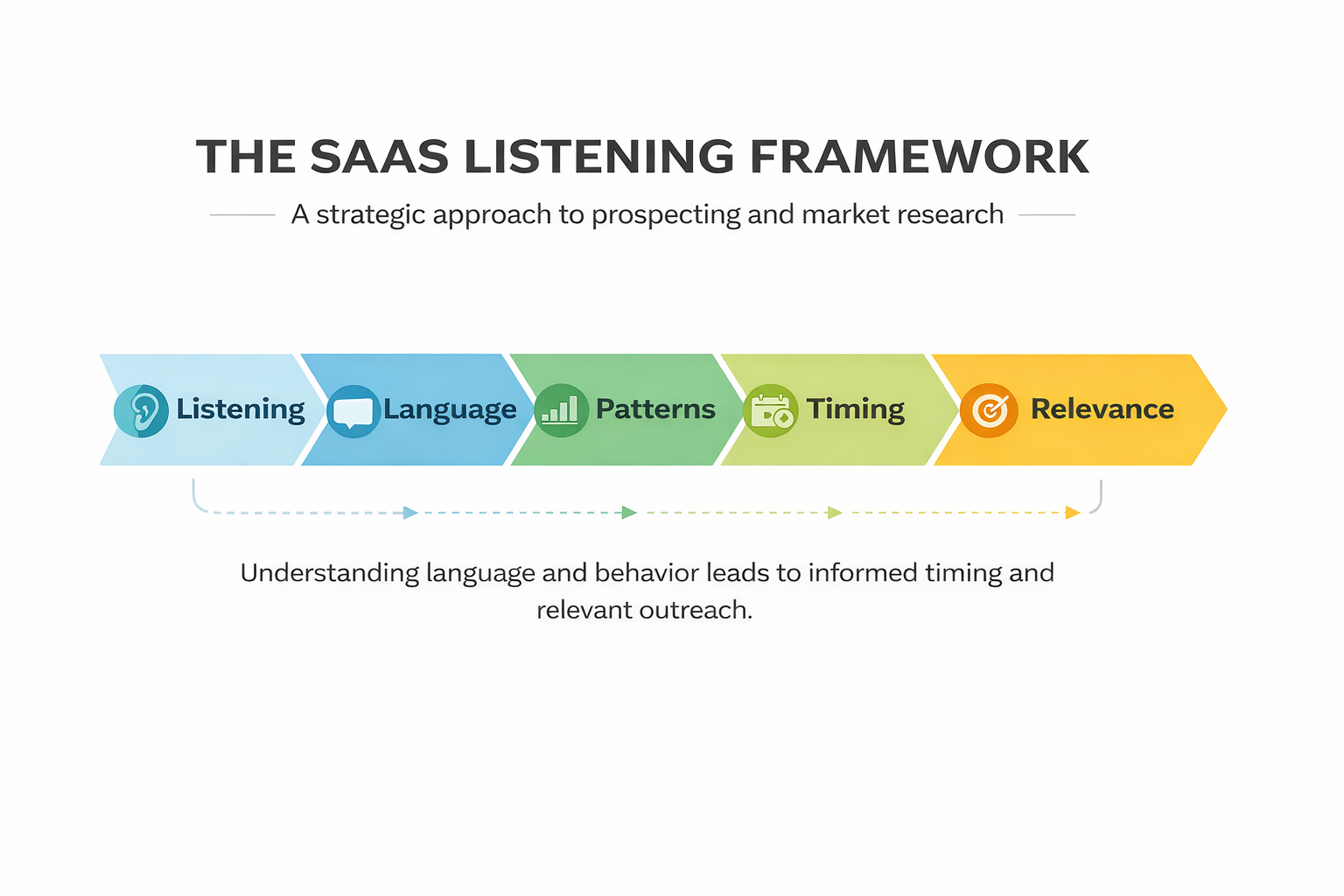
    Listening → language → patterns → timing → relevance
    Listening → Language → Patterns → Timing → Relevance (image by ChatGPT)

    Coding Versus Marketing

    If you’ve ever written a piece of code that magically worked and didn’t fully understand why it worked, you’re probably a SaaS founder.

    Meaning, you’ve built something that works, but you’re not going to stop until you understand the full process and mechanisms of why it works. This is the edge you have as a programmer and a founder.

    Software you get. Code you understand. ProductHunt is your jam. You’ve got so many shades of green in your GitHub profile it could be your holiday card this year (hey! that’s an idea!).

    But marketing. This is where you need a bit of guidance.

    Why? Not to be rude or offensive, of course. But it’s just not your wheelhouse. Marketing isn’t quite as agile as the MVP ship and iterate process. We don’t have a changelog the size of Santa’s Gift list.

    In marketing, we need curiosity — this is how we’re alike. But we also need patience. We need a strategic plan (quarter by quarter). And that mental discipline of patience is the differentiator.

    We have to trust our decisions and let them work. Yes, sometimes it feels like watching a pot of water boil. More on that from The SDM Show episode I recorded today with Rob Cairns (coming out Monday).

    The Fallacy of the Persona

    If you’ve been to a marketing conference, you’ve been to them all. Everyone talks about personas the way Founders talk about perplexity. It’s like being in a room full of people describing their ideal spouse.

    “I’m looking for a man in finance Trust fund 6′ 5 Blue eyes Finance Trust fund 6′ 5 Blue eyes”

    I’d love to show you the WHY behind Lists on X.

    So let’s focus on the problem Twitter Lists solves for SaaS Founders: listening (huge). You don’t have to create a fictitious persona. Heck, most of us dont always know our real ideal customer.

    Instead of guessing, follow and list your ideal customers on X (Twitter), read their tweets (the list filters your feed), and understand the problems they’re actually having. Take notes, etc.

    “Twitter Lists are not posting tools — they’re listening tools. Your audience is telling you exactly who they are if you look.”
    — Bridget Willard

    You should do the same for your Fans and Customers. You want to read how they’re experiencing not just your software but what problems they’re having. This gives you ideas into iterations and add-ons.

    Let’s pick on Google Workspace for a minute.

    My good friend Rob Cairns loves Gemini. I’m more of a ChatGPT girl, myself, but we would both argue that you should choose one and stick with it. After all, you’re training the LLM.

    So I was writing a 3,300-word article for a SaaS client the other day, and I was curious if Gemini could tell me how long I’d been working in that doc. Like, that’s a legitimate business question. Did I make money on this deliverable?

    When I asked Gemini, I was told she could not read the Revision History in Google Docs. Wait. What? Isn’t that a reasonable request? Probably now it is. But originally Gemini was just a writing helper. LLMs are the English Majors of AI. They don’t really do math.

    Of course I tweeted about this. (See? We all share random information.)

    You'd think that Gemini would be able to answer a time-based question in a Google Doc, especially given the revision history.

    I really feel like AI should be able to do math. pic.twitter.com/0yvS6Mnx0J

    — Bridget Willard (@BridgetMWillard) January 23, 2026

    Did I get a response? No. But I do hope they’re listening.

    If your prospects are already talking in public, why are you guessing what to say to them?

    Watch The Video — It’s Worth Every Dollar You Paid to Read This Post

    This short, 19-minute video gives you my secret sauce as a SaaS Marketer on how I use lists to inform blog topics, better understand our ideal customer, and use my time online wisely.

    In this video, I explain why Twitter Lists matter and walk through how I actually use them to focus on specific market verticals without the noise.

    Stick around until the end — there are some solid nuggets for founders and marketers who feel stuck guessing what their audience wants.

    Full walkthrough + resources: https://bridgetwillard.com/twitterlists/

    Timestamped Highlights

    00:00 – What Twitter Lists (Lists on X) actually are

    They’re not the same as email lists.

    00:32 – Why Twitter works so well for SaaS & B2B

    The culture of X is listening and learning (sans political stuff)

    00:36 – Listening vs broadcasting (and why it matters)

    Anyone can set up an RSS Feed.

    00:49 – Tweets are indexed: the overlooked SEO benefit

    Search for a topic in Google Look at the carousel of Tweets (posts on X).

    01:27 – How public Twitter Lists help you focus on one demographic

    Focusing your time reading posts from one vertical on X allows you to learn about them — without getting distracted.

    01:59 – Turning off retweets to reduce noise

    Bonus: This is why I’m always doing the Old School RT.

    02:43 – Why buyer personas are often outdated (and misleading)

    People grow, age, and change their preferences, jobs, and locations.

    03:14 – Listening to real conversations instead of inventing audiences

    This focuses your attention on now and the future; not dwelling on random keyword research (which is really for PPC, btw).

    05:08 — How to Make Lists on X (and Graphic info)

    It’s easier than you think but you do need to do it on desktop. Then you can manage them on mobile.

    06:52 — Using the List for Conversation (Prospecting)

    Make a routine. Maybe on Tuesdays your FinTech SaaS only engages with CFOs. Wednesdays are for Accountants. Thursdays are for Payment Gateways.

    08:50 — Small Demo of the FREE Sidekick for SaaS Chrome Extension

    You really should check this Chrome Extension out if you’re not super wordy.

    14:46 – A little bit about FlowChat.com

    I had a quick demo of FlowChat.com this last week and I’m beyond impressed — especially with their integration with lists on X.

    16:37 — Twitter Lists are Crucial to Save Time

    Most SaaS Founders don’t have an hour plus a day to prospect on X. Use lists to make your time spent more effective.

    18:08 – Advice for founders tired of “build in public” confusion

    Hey, don’t be afraid to reach out to me if you’re interested in moving the needle.

    Next Steps / Resources

    • Learn more about my SaaS Marketing Package
    • Check out my Twitter Marketing book
    • If you want a practical walkthrough of how to create, name, and use Twitter Lists for SaaS and B2B audiences, check out my step-by-step guide here.
    • Thumbnail generated by ThumbnailCreator

    Full Transcript

    (00:04):
    Hey everybody, it is your friend, Bridget Willard here from BridgetWillard.com. I wanna talk to you a little bit about Twitter lists or Lists on X.

    (00:15):
    So I had a recent conversation with somebody in the SaaS field, and it always fascinates me how people have different perceptions of what Twitter can do for B2B. Twitter — I am a huge proponent of Twitter for business-to-business. It allows you to listen to your audience, do customer service, It informs the content that you produce on your website, It helps you with prospecting, and BizDev.

    (00:49):
    And it’s so great because it’s indexed. Tweets, individual tweets, are indexed by Google. It’s great, but, but also Twitter lists allow you to focus your attention on one certain demographic. And I have a real sinking feeling, a real actual theory that when you use keyword-like list descriptions for your public lists, it helps suggest those same kind of followers.

    (01:29):
    People can subscribe to those lists and just see the feed of those people. The only time you won’t see the feed of those people is if you have somebody pressing their Retweet or Repost button. Those people, you just go to their profiles and, and say, turn off retweets or reposts, which a lot of people don’t know you can do on Twitter. And that does help turn off the noise, uh, especially when it’s not really them talking.

    (02:01):
    But it gives you a real good sentiment analysis so that you don’t have to worry about what creating this persona of Bob, The Website Builder, who is 20 years old, lives in his mom’s basement, drinks IPAs, and plays Dungeons and Dragons. Because it’s not even accurate. Bob is 40 now. He has kids. He’s married. He’s got a mortgage. He’s, he likes fine wine. Like he started collecting wine. You know? He’s helping his kids with their Raspberry Pie applications. They’re doing geocaching games. They’re camping. You know? It’s a totally different vibe.

    (02:45):
    So like, instead of making a hypothetical audience based upon your assumptions and biases, ’cause let’s, let’s just admit it, it’s a bias. Listen to what your people are saying.

    (03:03):
    People write on Twitter all day long, all kinds of stuff. Stuff you like, stuff you don’t like. But you’re learning, you’re learning about them. How they think. What software they like.

    (03:16):
    You should definitely have a Google Alert set up for your brand name, your website domain name — as it happens, all results. Check out Alertmouse. I’ve done a tutorial on Alertmouse for you to check that out.

    (03:32):
    Yes. But Twitter list isn’t about you broadcasting to, to those people. It’s about you listening to a certain demographic.

    (03:42):
    So let’s do some screen sharing and we’re gonna go to Google Chrome and we’re gonna go to my Twitter account. So on my Twitter account, you have the Helping SaaS brands, all this stuff, right?

    (04:00):
    I’d like to mention right now that there is a book that I wrote in and published in 2021, “The Definitive Guide to Twitter Marketing. I Double Dog Dare You To Try It.” It’s $5.99. I’m not retiring on this income, but if you purchase it, I’d love a review. Um, it’s also a blog post on my website, and if you want to read it, instead of buying it on as a paperback or a Kindle or or whatnot, then go ahead and do that.

    (04:39):
    Instead, I’d also like to refer you to my blog post called Be Efficient on Twitter with Twitter list. Last updated in 2021. It’s X. So I mean, but you, you know what, you know what I’m talking about. The, the strategy is the same. You don’t have to read every tweet. You like, use your time well, right? So I will let you go to that link.

    (05:08):
    So let’s just talk about, so when I go to somebody’s profile, you’re gonna see different options. But I’m going to my profile ’cause I’m gonna show you how I make my lists. So I do, I help SaaS brands, right? So my lists, more, lists. My lists are focused on certain NI niches or niches, however you say it. I have #MarketingTwitter, it’s a hashtag everybody used to use for a while. Automotive people from Arizona. So there’s G Geolocation, too. Bay area, if you can drive to San Francisco, you’re on this list. C-Suite. People on Corpus Christi, Texas. Conferences. Construction, blah, blah, blah, blah.

    (06:00):
    But this is why it’s good for prospecting. Oops. You can go to, you see how mine has the logo and theirs doesn’t. So when you go to your Twitter List and you, you’re setting them up on desktop, right? You’re going to edit your list and that’s when you can put a graphic here. It’s gonna be 1500 by 500 and you’re gonna want your circle graphic right in the middle so that when they see the list, your brand is there, too. So if I go to marketing, I see all this. So let’s go to back down, ’cause it shows me the list that I’m on, too.

    (06:52):
    Let’s go to SaaS, SaaS products. So far, I only have 197 people there. So I have a couple of options. I can either just look at the members or I can read the tweets. So if I look at the members, I could also say, I’m over it. I don’t, this is a bad lead or whatever. You don’t have to unfollow them, but you can decide maybe I just don’t want them on my list anymore. I kind of don’t wanna pick on anybody. But let’s see. I wonder if there’s some people on here that, that are irrelevant. Well, Dymtro, he’s not really a, a SaaS, so I’m gonna remove him. He’s cool. He is in my Construction List.

    (07:45):
    Alright, so, and you see I have SaaS, uh, Alertmouse. So if I’m in prospecting mode, I can go ahead and look at this list and only focus on these tweets. Anthropic.

    (08:04):
    David Phillips, this guy is the CEO of Fondo.com, which looks like such a great company and such a great account. That would be so great. So, “Collision, installed this selfie with @PatrickC and our Y Combinator aluminum friends, uh, alumni, friends.” Aluminum . So I could reply to that and say, “what was your biggest takeaway, right? What was your biggest takeaway? Do websites still matter or eCommerce?”

    (08:50):
    Okay? So you can do that, or you can use my free Chrome extension “Sidekick for SaaS” where you could toggle it on. Now my little face is in the way. And I can pick a, I can pick up any kind of post. Let’s see, go back. Oops. Let’s go back to SaaS products.

    (09:23):
    So Fondo reposted, “Congrats on this launch, @TheChowedhary,” oh, I probably wanna follow this guy, but I also wanna put him on a list. So I’m not gonna follow him here. I’m gonna open it in a new tab. Okay, bear with me here. He’s a CEO. So he’s also in San Francisco. So those are three lists, right? So what I’m gonna do before I follow, I always do this before I follow, is I’ll go more the three dots, right? Shish kabob menu. Add/Remove to to lists. He’s gonna go on my C-suite.

    (10:54):
    Now, see, it’s not this, this way, it’s not in alphabetic order. This is an order of creation. So I know that my Bay Area list is way, way down. Bay Area. And I’m also going to put him in the C-suite. Boom, save, follow.

    (11:30):
    So let’s see if there’s something I wanna talk. They are launching the most accurate and fastest web search APIs for AI agents. Um, that’s pretty amazing. So the infrastructure for agentic AI. So, uh, if I wanna use my Sidekick for SaaS, I’ll say, I’ll press the Chrome extension, toggle sidebar on this tab, click off, highlight the text. I’m going to say “use selected post,” and now I’m gonna generate comments. I could rewrite it like me or just generate comments.

    (12:33):
    So it says, “exciting launch, the ability to transform guessing into doing can really elevate the effectiveness of AI agents across industries. Love to see innovation.”

    (12:46):
    Like you could just copy it and then insert it. Or you can do rewrite, rewrite as Bridget. This didn’t mean to be like a pitch. I mean it’s a free Chrome extension.

    (12:58):
    “Congratulations. It’s exciting to see that. Love the focus on speed and accuracy. Two things every SaaS founder knows are critical.”

    (13:06):
    Now, that sounds like me, right? So I’m gonna copy it , and I’m gonna go right here and I’m gonna paste it and I’m gonna reply, right?

    (13:25):
    So if we go back to the list, so @FounderJournal, what is done by Fondo. Fondo’s, right here, you can reply to that, right? @LemonSqueezy, they’re retweeting themselves. You can reply to that.

    (13:46):
    But also, some of these are big SaaS companies and some of them are small SaaS companies, right? ’cause Fondo’s Big, I don’t know what Buddy Punch is. Oh, I think it’s a time card. Yeah. “Time tracking software to manage your workforce.” Yeah. “Remote job sites expose the limits of most time tracking software.” Yeah. Like, so you see what I mean? Right? So let’s stop sharing.

    (14:16):
    So the point is that it, no matter what you’re working on, whether you’re trying to learn about, you know, different verticals, right? Construction people, SaaS people, WordPress people, WordPress Products, whatever it is that you’re focusing on, using lists and always doing that list management, which is part of all of my Twitter plans, by the way, even the lowest one, including the graphic. That is key.

    (14:47):
    And I’m gonna tell you something, I had a little bit of a demo today of, of a really cool product. Well, it’s a SaaS. And it’s called FlowChat.com. And they have the ability to import contacts that you put on your Twitter lists and put them into your sales funnel, follow and your automation rules for whether or not they are a qualified lead. And then, you know, away you go. In this Kanban style thing,

    (15:32):
    I’m, I am blown away at what people are building right now. It’s really fascinating. So you should go check it out, FlowChat.com. There’s some very lovely people that work there and they’re doing great things that I think could really change how omnichannel works, right? So Omnichannel being everywhere, but we’re on, we’re omnichannel, but we’re not omniscient. You need kind of a command center for all of this. And then how do you even track all those leads?

    (16:05):
    They, of course it works with a, a bunch of CRMs and stuff like that. I’m not an affiliate yet. Or you know, you never know. But I did just see it just as a like, intro call. We were just talking to each other and I’m like, I don’t know about my clients. Some of my clients would probably like this, but I’m kind of thinking that it’s gonna be my next big purchase. Because it is a very cool tool that will allow you to be more serious about your prospecting on Twitter.

    (16:37):
    Twitter lists are huge. They are an untapped resource of people talking. Everything that they’re thinking about online based upon your ideal customer profile, right? Or your persona or what, or Bob, The Web Builder, whoever, whoever it is that you’re trying to, to prospect, right?

    (17:04):
    Who, who is it? Where is your biz dev happening? Maybe it’s just local, right? Maybe it’s just roofing websites.

    (17:11):
    Either way. Um, Twitter lists are huge, humongous, very huge for SaaS because who uses SaaS? Other companies. It’s B2B. Twitter and LinkedIn are the best for, for B2B, hands down. But I’ve already talked a lot about LinkedIn, so it’s time for that video. Another day we’ll talk about that with the 3, 2, 1 method. Just look it up, you’ll find it. I’ll probably put a link.

    (17:40):
    Thank you for reaching to the end of this video.

    (17:43):
    Hey, if you want some help with your SaaS, I have three levels of pricing. I have different ways you can engage with me. Of course, I have the SaaS platform package, which is four blog posts a month and Twitter Pro. But if you haven’t been writing blog posts, there’s no way I would let you buy that from me. So just if you need help, you’re tired of being the founder who’s floundering in “build-in public” community on Twitter on X, and you need some help, let’s do it. Let’s do it. Let’s figure it out. Let’s, let’s get it done.

    (18:21):
    My name is Bridget Willard and you can find me at bridgetwillard.com. Bye.

    January 26, 2026
  • In-Store Apps Shouldn’t Be One-Night Stands — Focus on Retention and Churn

    In-Store Apps Shouldn’t Be One-Night Stands — Focus on Retention and Churn

    This article was written by Warren Laine-Naida and Bridget Willard. Although in the first-person, you’ll probably see both of our personalities. Bridget has a successful marketing agency that focuses on SaaS Products and also has a retail job while Warren defines himself as a web generalist who is also a teacher. Basically Bridget works with products and Warren builds websites. We both have a passion for understanding the WHY before doing the WHAT.

    We’d also like to note that we’ve written four books together three of which are a series and none of which were written by AI of any kind and the same goes with this article. 

    We’ve used our personal experiences as well as data from the original source for our arguments.

    TL;DR: Retail apps need to shift from transactional “one-night stands” to building a long-term customer relationship.

    • Problem: Apps focused only on single discounts (e.g., “$5 off first purchase”) result in high churn and low long-term engagement.
    • The Shift: Focus must move from install + redeem KPIs to sustained engagement (store visits, interactions) over weeks and months.
    • Value: Apps must provide daily micro-value (tips, small rewards, helpful reminders) and emotional hooks (streaks, anticipation) to justify retention.
    • Personalization: Leverage first-party data to deliver hyper-personalized content tailored to individual behaviors, ensuring the app is part of a cohesive omnichannel strategy that connects all touchpoints.
    • Strategy: Redesign onboarding to show value after the initial coupon. Integrate AI to augment staff, don’t replace them.

    Keep it Simple: 5 EZ Customer Service Reminders

    1. Be Proactive. Think like your customer – what motivates you?
    2. Do not see this as a cost. Customer service is a feature, even today.
    3. Interactions are opportunities to sell. Questions, answers, freebies, sales, loyalty.
    4. Don’t leave it all to AI – integrate AI, don’t replace your people with it. It’s just software.
    5. No one style fits all — tailor your offers to customer expectations. Easily done with digital.

    What Do Customers Want from In-Store Apps?

    In a word: convenience. And it’s not just Gen Z and Millennials – who adopt in-store apps above 84% (according to Chain Store Age). Consumers overwhelmingly also want scan-and-go. We know what you’re thinking (thanks a lot Walmart). Big Box Retailers often change the expectations of consumers.

    One of the things I love about being in retail as well as B2B marketing is I get data – every day – in real time. Even at discount retailers, customers want scan and go. They don’t know what kind of datacenter would be needed to track that kind of real time inventory. But I couldn’t even imagine self-checkout. With the price checks? Holy Toledo. There would be riots. And we’re not even talking about shrink that comes from self-checkout. 

    “According to the latest LendingTree survey of 2,000 U.S. consumers, 15% of self-checkout users have purposely stolen an item — and 44% of self-checkout thieves plan to do it again.” LendingTree

    Amazon ruined delivery. I’ll never forget doing customer service for a skincare line out of Austin, Texas. Customers were irate if the delivery was longer than 5 days – to Germany. (“I’m sorry, we don’t have a distribution center in the EU,” I would copy/paste in the emails.) Comedian Ronny Chieng famously has the “Amazon Now” bit in his 2020 Netflix special. 

    “To be hand delivered into your home like an Emperor… any fleeting thought.. When you’re drunk… I want just one pen.” Ronny Chieng

    But I Have an Online Shop. Why Do I Need an App?

    It’s true that an app often feels like a waste of digital storage and keeping inventory for physical shops isn’t necessarily for the mom and pop gift shop. An online store should be remarkably different than the instore app. Meaning, being online is an opportunity to have exclusive deals only found online while the in-store app can feature a map (like Walmart) or a way to manage your credit card (like TJ Maxx).

    A shop and a mobile app can compete with one another. A South Korean study done in 2022 by Boram Lim, Ying Xie, and Ernan Haruvy saw a “cannibalization” of the online store by the app. 

    “The mobile channel is a complement for offline customers but a substitute for online customers.” Science Direct


    “Respondents’ top frustrations with in-store shopping were out-of-stock products (43.9%) and long checkout lines (29.7%). These concerns are reflected in their preferences for must-have retail app features. For instance, 52.7% of respondents want to see real-time product availability. Consumers also value exclusive offers (52.3%), coupon scanning (52.2%), and loyalty programs (50.0%).” Chain Store Age

    Why Give One-Time Customers Free Stuff?

    • Quick scene: shopper downloads an app for “5 bucks off,” uses the coupon once, and deletes the app on the way to the car
    • Rhetorical question: If that’s your app strategy, what does that say about your relationship with customers?

    Stop treating that initial discount like the digital equivalent of ghosting. The “$5 off” is the opener, not the relationship. 

    If a shopper deletes your app on the way to the car, you didn’t fail the launch; you failed the follow-up. 

    Redesign your app onboarding to immediately showcase the daily micro-value — the personalized tips, anticipated weekly rewards, and content streams that earn the long-term rental space on their phone, proving you’re serious about more than a single transaction.

    Reminder: Micro-moments are the critical, intention-rich instances when people turn to a device, usually a smartphone, to satisfy an immediate need to know, go, do, or buy, demanding that businesses “be there, be useful, and be quick” with relevant information.

    If your app strategy is built solely on one-time transactions, you’re publicly broadcasting that your brand is only interested in a one-night stand. This is a fundamental hygiene failure in modern retail. Don’t talk to me about your sustainable marketing initiatives.

    Shift your KPIs away from mere installs and commit to turning the app into a true relational platform: use first-party data to inject emotional hooks and hyper-personalization that signal patience and commitment. 

    Your app is a persistent conversation, not just a temporary megaphone for generic coupons.

    “Personalized marketing is more than a nice-to-have – it’s a must-have. We’re not talking glorified AI from the far future either. The basis for any successful marketing is establishing a personal connection. Empathy. A relationship.

    Today, personalization means more than just addressing customers by name in an email. Personalization delivers individual content that corresponds to a customer’s product preferences and behaviors. It connects all channels – from email to shop to a mobile app.” Andrews Wharton

    What Companies Get this Right?

    TJ Maxx / TK Maxx in the EU gets this. Their app allows you to shop, manage your credit card, and use, track, and spend your rewards points. Plus, mobile users get their rewards points in 48 hours instead of monthly. The app is a must-have. 

    Walmart gets this. You can build lists, check out prices, compare products, and track Walmart Cash. Walmart Plus Members can view their gas discount codes at Murphy Gas Stations, get free shipping and delivery, and also get other rewards like 25% off Burger King Orders, save on auto care, get free online pet care with Pawp, and choose a free streaming app: Paramount+ or Peacock.

    Total Wine & More allows you to gain points as well as special coupons that you can apply for either in-store or delivery as well as mixing and matching from certain distributors. 

    The app can’t just be your one-way ticket to data for modeling. You have to give something in return. And if you want to keep your customers in their apps (active customer base with a higher lifetime value), then keep giving. 

    So many companies offer a one-time discount for email or SMS signups. We take the 10% and immediately unsubscribe and say “stop.”

    And by the way, slow down on the emails, will ya? I finally had to unsubscribe from Old Navy because they emailed every single day. This is too much. It’s badgering and harassment just one step away from a Temporary Restraining Order. Seriously. Once a week is enough. 

    Your App Isn’t a One-Night Stand. Or is it?

    • Most retail apps are built around a single discount or launch campaign, not an ongoing relationship. The result is cluttered phones, low usage, and marketing teams wondering why “the app isn’t working.”
    • I have a bakery app and a pet store app. They gave me 5 and 10 bucks off my first purchase. But since then, nothing else. WHY should I keep your app? This is just a digital extension of “subscribe to our newsletter for 5 bucks off your first order.” How many of those do people subscribe to and then never read another email from the company?
    • I still receive paper coupons in the mail identical to the coupons in the app. This makes as much sense as sharing the same thing on social media as you do in your email newsletters.

    Your $25,000 app isn’t bringing you results? It isn’t working because it’s a digital clone of your disposable paper coupons – an expensive one at that. There is nothing special for the people who give up memory on their phones and pay for usage. Stop treating the app as a launch campaign; it’s an ongoing ecosystem. 

    If your value proposition ends after the first transaction, expect the digital equivalent of a high-churn, low-usage landfill on your customers’ phones. 

    So, in effect, you aren’t asking why customers should keep your app; you’re silently proving they shouldn’t. And then you wonder about churn. 

    And in-store app churn is a huge problem. According to Business of Apps, shopping has a 30-day churn rate of 95.8% (2023) – up from 94.3% (2020). Ninety-Five Percent. That’s crazy. In the US, 30-day churn is 97.2% and in Germany it is 97%.

    So, people say they like apps, but do they really? And, are they just downloading your app to get the one-time discount? How do you keep your app on your customers’ phones? How do you justify the cost of the app with a 95% churn rate?

    Again, you have to go beyond the first date. Don’t just digitize your existing inefficiency; amplify your strategy. Sending the same offer across physical mail, email, and the app is digital laziness — it tells the customer the app provides zero incremental value. 

    So stop the redundant broadcast. Every one of your channels, especially your app, must deliver unique, personalized, and context-aware utility.

    “Apps aren’t a nice-to-have —  they are part of your sustainable marketing. Smarter personalization, less noise, better results.” Warren Laine-Naida

    Treat Customers Like You Would Like to Be Treated

    • Contrast: a one-night stand versus a steady relationship built on small, repeated moments of value. Do you give away the farm on the first date? No. You keep the relationship interesting as long as possible.
    • Question: If you wouldn’t treat a partner this way, why treat your customers like this?

    Everyone knows, the biggest mistake is giving away the farm on the first date. 

    A sustainable relationship is built on small, repeated moments of value, not one massive giveaway. 

    Inject daily micro-value (like tips, streaks, or tiny surprise rewards) and emotional hooks (like anticipating “next week’s coupons”). This continuous drip of utility, proven effective by thousands of point cards, is how you earn daily attention and retention.

    The customer relationship is a direct mirror of your marketing commitment. If you’re unwilling to put in the consistent effort and personalization required for a real-life commitment, why do you expect customer loyalty? 

    Ask your partner how long they would stick around if your relationship were simply your push notifications.

    Your business deserves relationship standards. If you aren’t passive or boring in your love life, stop being passive and boring in your marketing. As David Ogilvy famously said, “the customer is your spouse.”

    “First-party data is like a direct conversation with your customers, allowing you to gain a deep understanding of their preferences and behaviors.” Slixta

    What a Customer Relationship Looks Like: a Reminder

    • Daily micro-value: timely tips, tiny rewards, helpful reminders, not just “20% off, today only.” This is why point cards work! You collect points each time you use the app. I look forward to these apps and the new coupons each Sunday.
    • Emotional hooks: anticipation of “next week’s coupon,” streaks, recognition, and small surprises.

    The biggest strategic failure is mistaking a discount for a relationship. Stop relying on the massive, unsustainable “20% off, today only” blasts. You need to understand the psychology of daily micro-value.

    Point cards work because they create a collect-and-anticipate loop, not a spend-and-forget one. 

    Use your app to inject that low-friction, high-frequency utility — timely tips, tiny rewards, or helpful reminders. 

    Crucially, deploy emotional hooks: build streaks, offer genuine recognition, and cultivate the anticipation of “next week’s coupon” like a favorite Sunday ritual. This repeatable, addictive engagement is how you earn daily real estate on your customer’s screen.

    “Consumers want personalization, and they are more likely to buy more and spend more with brands that tailor the experience.” Forbes

    Upgrade from Ad Campaign Thinking to Relationship Thinking

    • Shift from “install + redeem” KPIs to engagement over weeks and months (opens, interactions, store visits).
    • Treat the app as part of a broader customer journey: in-store, email, social, and website, reinforcing each other.

    The “Install & Redeem” metric only tracks the first date. Shift your focus entirely to sustained engagement metrics – opens, interactions, store visits – over long time horizons. 

    Your app must be architected as an essential component of a complete customer journey, constantly reinforcing value found across email, social, and in-store touchpoints.

    “Smart omnichannel isn’t ‘post everywhere.’ It’s about every touchpoint working together – like a well-run shop. Social draws people in, email keeps them curious, ads help them decide, your app acts like a personal assistant in their pocket, and support makes sure they keep coming back.” Rocket.net

    Here are Some Practical Steps for Retailer’s Apps

    • Redesign onboarding: show what happens after the first coupon, not just how to claim it.
    • Build a simple content calendar: weekly offers, seasonal tips, local news, and customer stories that keep the app alive.

    Your current onboarding is a tactical failure. Redesign it to be a strategic promise. Focus not on claiming the first coupon, but on revealing the long-term weekly content calendar of value (tips, local news, stories).

    This structure is what signals an ongoing relationship and gives the user a concrete reason to let the app survive past the first swipe.

    “Rather than sending every user a generic 10% discount, a clothing brand can detect that a particular customer browses winter jackets every night between 9-10 PM on a mobile device and send a time-sensitive offer accordingly.” Artizone 

    Implement What You Know: Caring is Sharing

    • Brief example of two fictional stores: one “one-night stand app,” one “relationship app,” and how their metrics diverge over three months.
    • Highlight compounding effects: repeat visits, word of mouth, and data for better personalization.

    Run a three-month internal metric comparison: “One-Night Stand App” vs. “Relationship App.” You will see that the divergence in key metrics is exponential. Talk, hug, kiss vs. jump into bed.

    The relationship approach generates better data, fueling superior personalization, which drives repeat visits and priceless word-of-mouth — the true engine of sustainable growth. It’s all about happy, loyal, sharing, and caring customers. 

    Remember: UGC is generated by either really happy or really angry customers, not bored customers. Which customers are you nurturing?

    “Don’t have the App thing happening yet in your business? No worries – old school is no fool. SMS boasts a 98% open rate!” Rocket.net

    Wrapping Up: Isn’t Your Business Worth the Time?

    • Circle back to the love-life question: your business deserves the same patience, care, and commitment you’d give to a real relationship.
    • Call to action: before planning your next app or coupon, decide whether you want a one-time date or a long-term customer.

    The critical strategic decision isn’t the coupon amount; it’s the commitment level. 

    Before you budget your next app or discount campaign, look in the mirror and decide: Are you building a system for a single, fleeting transaction, or are you ready to invest the patience, care, and personalization required for a long-term, profitable customer relationship?

    Say, “I do.” 

    Loved This Article? Hire the Writers!

    If you loved this article and it gave you some things to think about and change in your business, then why not hire either Warren Laine-Naida or Bridget Willard to write for your brand or product, too! 

    December 4, 2025
1 2 3 … 69
Next Page→